250 Years of Liberty: Why America Keeps Answering the Call
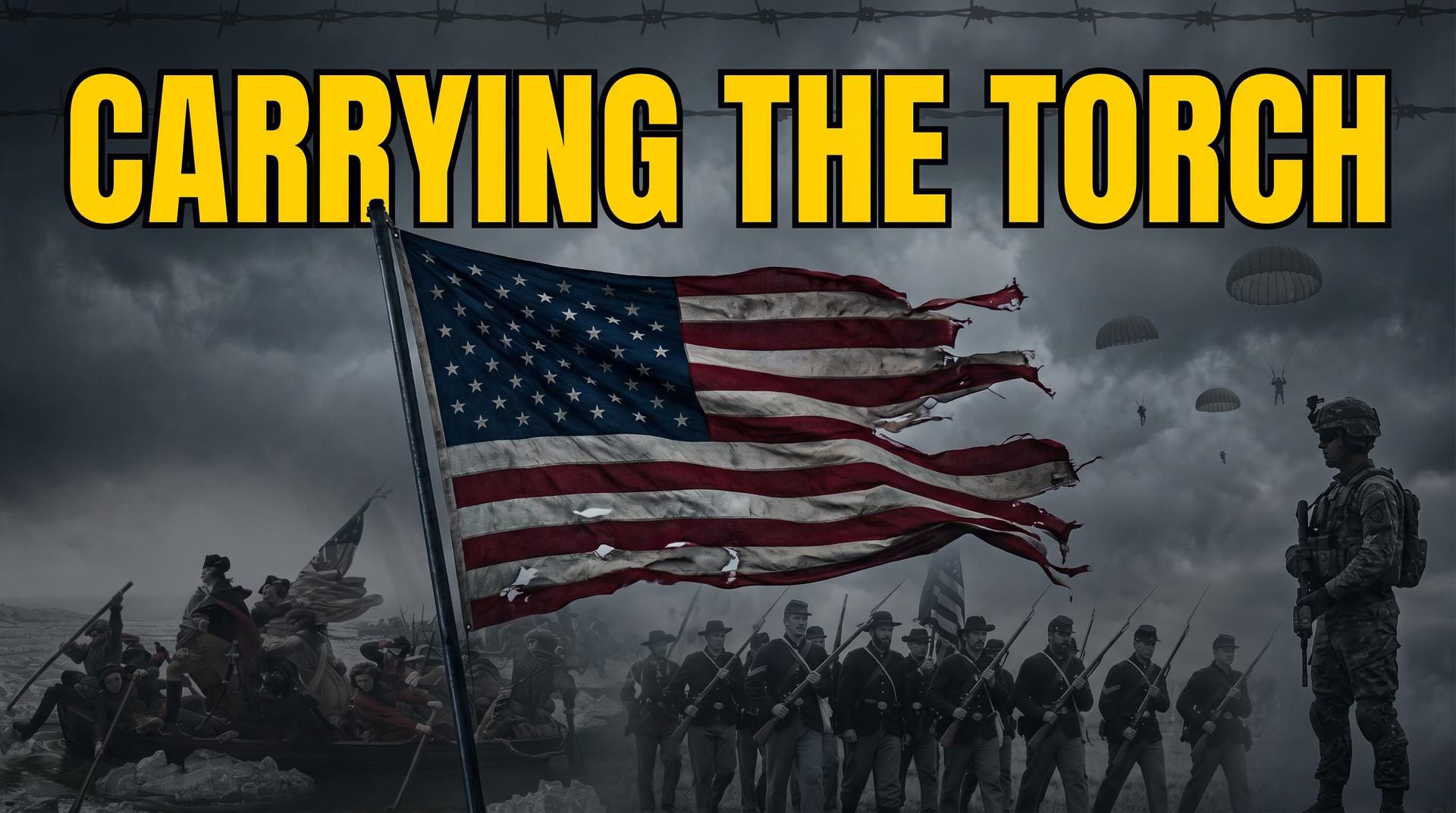
Freedom has never been free. That is not a bumper sticker — it is a fact backed by 250 years of history. From the frozen fields of Valley Forge to the deserts of Iraq, Americans have bled, fought, and died to protect something most of the world has rarely tasted: genuine individual liberty.
We are not a perfect nation. We have stumbled, contradicted ourselves, and fallen short of our own ideals. But when you look at the full arc of American history, a clear pattern emerges: when tyranny rises, America shows up.
Where It All Started: 1776
The Founders were not just fighting a tax dispute. They were making a radical philosophical bet — that ordinary people could govern themselves without a king.
They staked their lives on the idea that rights come from God, not government
A revolutionary idea at the time.
They built a system designed to limit power, not concentrate it
Another revolutionary idea at the time.
They put it in writing so no future leader could pretend otherwise
The Revolutionary War was the opening act of a 250-year experiment. And despite every prediction to the contrary, the experiment is still running.
A House Divided: The Civil War
Eighty-five years after the Declaration of Independence promised that “all men are created equal,” America was forced to reckon with the fact that it had not lived up to those words.
The Civil War was not just about states’ rights or economic systems. At its core, it was a fight over whether human beings could be owned as property. Over 600,000 Americans died settling that question.
Lincoln framed it correctly: the nation could not survive permanently half slave and half free. Preserving the Union meant extending liberty — not just defending it for some.
It was painful, imperfect, and incomplete. But the arc bent toward freedom.
Twice Called to Save the World
World War I
America was reluctant to enter a European war. Then came German submarine attacks on civilian ships and a secret telegram proposing Mexico invade the United States. The reluctance ended.
More than 116,000 Americans died in a war they did not start, on a continent they did not live on — for people they had never met. President Wilson said, “the world must be made safe for democracy.”
World War II
This one needs no recounting except that young people are longer learning about it. Nazi Germany was systematically exterminating millions of people and conquering a continent. Imperial Japan had attacked the U.S. fleet and was brutally occupying much of Asia.
Over 400,000 Americans gave their lives
Millions more came home changed forever
The result: Europe was liberated, Asia restored and the free world survived
No honest person looks at the graves at Normandy or Pearl Harbor and says America was on the wrong side.
The Cold War: Holding the Line for Decades
From 1947 to 1991, the United States stood watch against Soviet communism — a system that had already killed tens of millions (80 to 100 million at last count) and sought to export that misery globally.
It was not just missiles and military buildups. It was:
Funding resistance movements behind the Iron Curtain
Rebuilding Western Europe through the Marshall Plan
Standing firm in Korea and Berlin when it would have been easier to retreat
Ronald Reagan did not apologize for calling the Soviet Union an “evil empire.” He was right. When the Berlin Wall fell in 1989, it fell in part because America refused to blink. Pope Saint John Paul II had something to say about Eastern European Communism too.
After the Cold War: Messy, Complicated, Necessary
The 1990s and 2000s brought interventions that were more debated — Kosovo, Iraq, Afghanistan. Reasonable people disagree about the execution. But the intent was consistent: stop genocides, dismantle terror networks, prevent WMDs from reaching mass-casualty hands.
The War on Terror cost thousands of American lives and produced real debates about strategy and nation-building. Those debates are worth having. But let’s not forget what September 11th looked like — and why doing nothing was never actually an option.
The Threats We Face Now
The world is not getting safer. Three things to watch:
China is building military capacity, asserting control over Taiwan, and exporting surveillance technology to authoritarian governments worldwide.
Russia has invaded a sovereign European nation and is testing NATO’s resolve.
Iran and its proxies, even though knocked-down still continues to fund terrorism and destabilize the Middle East and the greater world.
The Better American Tradition
As America closes in on its 250th birthday, the most patriotic thing we can do is be honest with ourselves. Not every war this country fought was a war it needed to fight. Some conflicts were born out of pride, political pressure, or the dangerous momentum that comes with having the world’s most powerful military. Those wars cost us — in lives, in treasure, in credibility. But the deeper American tradition, the one worth celebrating at 250, has always been the warrior who fights because he has to, not because someone in Washington needed to make a point. From the farmers who picked up muskets at Lexington to the soldiers who stormed the beaches at Normandy, the American at his best goes to war reluctantly, fights with everything he has, and comes home as fast as he can. That is the standard worth returning to. Those standards are:
Wars of necessity, not convenience.
Conflicts entered with clear objectives and exited with real victories.
As this country marks a quarter millennium of existence, that is not a naive hope — it is a return to form. America has always been capable of getting it right. The anniversary is a good reminder of what right looks like.
What Liberty Requires of This Generation
Every generation of Americans has been handed the same inheritance and the same obligation. The inheritance is freedom. The obligation is to defend it. That does not always mean war. It means:
Staying informed and engaged, not checked out into isolation
Supporting the men and women who wear the uniform
Understanding why America fights — not just that it fights
Refusing to take self-government for granted
Thomas Paine wrote in 1776 that “”Tyranny, like hell, is not easily conquered; yet we have this consolation with us, that the harder the conflict, the more glorious the triumph.” He was talking to a generation that had no guarantee of winning.
We have the benefit of knowing how that story turned out. The question is what we do with that inheritance.
The torch gets passed. The only question is whether we carry it forward.
The story of American liberty is unfinished. How this generation writes the next chapter is up to you and me


