America 250: The Republic Doesn’t Run on Autopilot
This is our closing argument — the companion piece to Part 4 of our America 250 video series. Over the past few weeks we’ve made the case in three parts: the companion piece to Video 1 on our constant need to defend liberty is here, the companion piece to Video 2 on the ongoing American economic miracle is here, and the companion piece to Video 3 on acknowledging the role of divine providence in our country’s history is here. You can watch the full video series here. If you haven’t read those yet, go check out the whole series first — this piece is the capstone, and it’ll hit harder with that foundation under it.
The Wake-Up Call
Ask a college graduate to explain Federalist No. 10. Then ask them to explain the trending political meme from this morning.
You already know which one they’ll get right.
That’s not a joke about kids these days. It’s a diagnosis of a nation. America’s decline in civic understanding isn’t an accident, and it isn’t new. It tracks precisely with two other collapses: the collapse of serious reading, and the abandonment of virtue as a life aim. These three things move together. When one falls, the others follow.
If you want to restore the republic — not just win the next election, but actually rebuild the thing — you need three forces working in concert:
Civic education. Great books. A culture of virtue.
Miss one, and the other two can’t hold the weight.
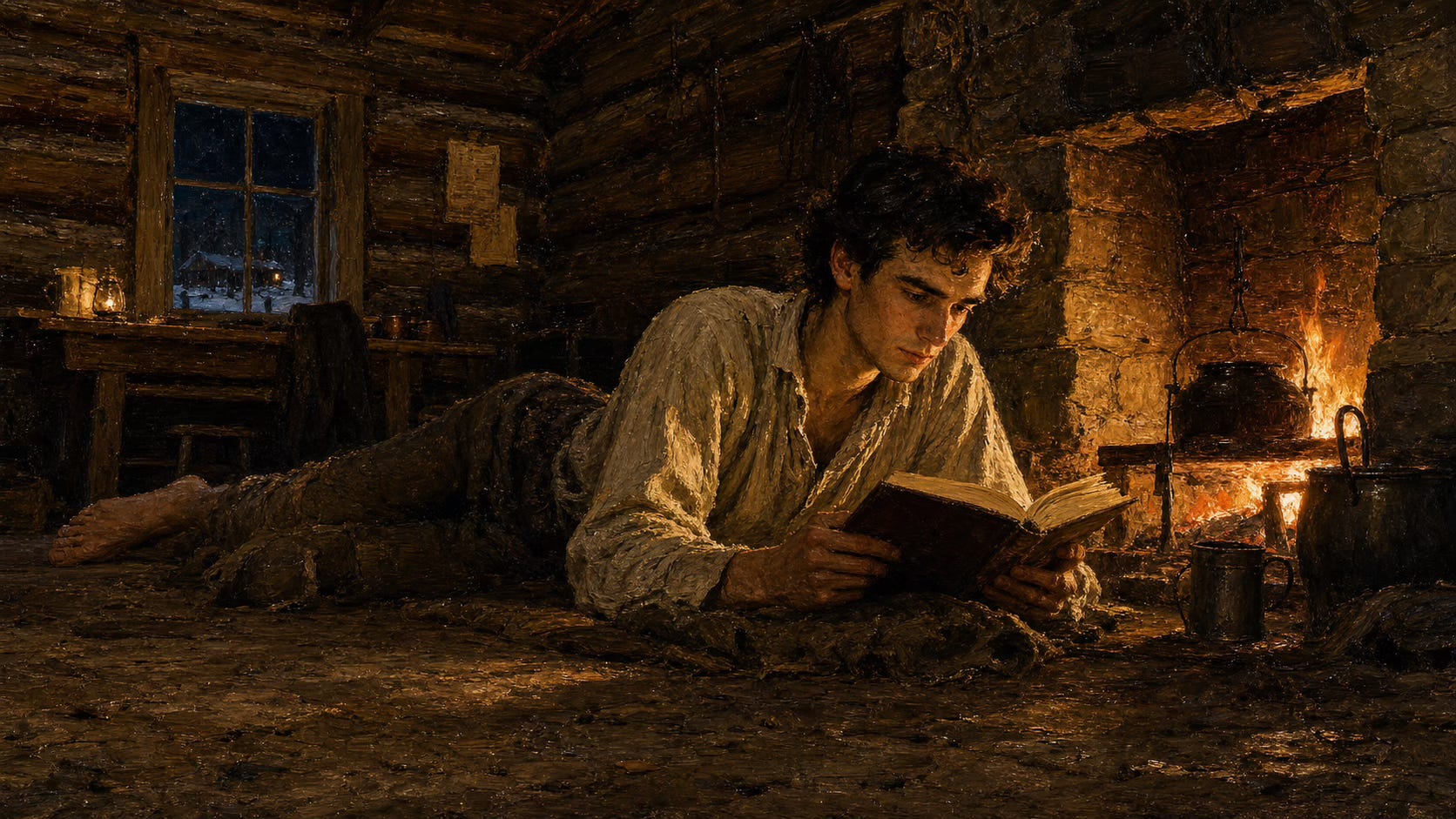
The Problem: Civic Illiteracy
Most Americans today cannot explain separation of powers. They don’t understand federalism. They’ve never been asked to. And without that scaffolding, rights stop being principles and start being feelings — things you feel you deserve rather than truths you can defend.
The result is predictable. Emotional politics replaces rational debate. Citizens stop being participants in self-government and become consumers of outrage instead — scrolling, reacting, sharing, never building.
You can’t self-govern what you don’t understand. And right now, most Americans don’t understand the machine they’re supposedly operating.
What Civic Education Used to Do
It wasn’t always this way. Historically, civic education existed to form citizens — not just workers, not just voters, but men and women capable of self-rule. The curriculum had three legs:
Founding documents — the Declaration, the Constitution
Moral philosophy — virtue, duty, natural law
Historical case studies — Rome, early America, the long record of what liberty costs and what destroys it
The founders built on a single assumption: virtue plus knowledge equals sustainable liberty. Take either one away, and the equation collapses.
They said as much themselves, plainly, more than once. John Adams put it bluntly in an 1798 letter to the Massachusetts militia: “Our Constitution was made only for a moral and religious people. It is wholly inadequate to the government of any other.” George Washington made the same case in his Farewell Address, calling religion and morality “indispensable supports” of political prosperity and warning that reason and experience forbid us to expect national morality can survive without religious principle.
That assumption wasn’t naive. It was earned. Take away the virtue, and knowledge becomes a tool for men who know exactly how to work the system for themselves. Take away the knowledge, and virtue becomes sincere but toothless — good people with no idea how the machine actually runs. Either way, liberty doesn’t survive the gap. The founders had read the history. They knew republics don’t die from foreign armies nearly as often as they die from within — from citizens who forgot how to govern themselves.
Fast forward, Bret Baier makes a version of this same case in his book The Case for America. He traces how civics instruction was once a fixture of American classrooms and community life throughout the twentieth century, only to fall away in the twenty-first — and the data on the result isn’t encouraging. His point cuts to the heart of the matter: civics, as he puts it, is simply “the way we participate in our democracy.” And you can’t do that if you never learned how the story was written or what principles actually formed the nation. Nearly every source he interviewed for the book landed in the same place — we need more civics education, not less.
Why Reading Good Books Matters
Good books do something a news feed never will. They train:
Judgment — what is true?
Moral imagination — what is right?
Perspective — what has worked before, and what hasn’t?
An algorithm optimizes for your attention. A great book asks something harder of you — that you sit still, follow an argument across three hundred pages, and come out the other side changed. One produces shallow thinking dressed up as engagement. The other produces depth.
Read Tocqueville’s Democracy in America and you’ll have a framework for understanding today’s polarization that no cable news segment can give you — because he wasn’t describing a news cycle. He was describing a pattern in the American soul, one that repeats itself generation after generation. Aristotle on the virtues. Augustine on rightly ordered loves. The Federalist Papers on the actual mechanics of liberty. These aren’t relics. They’re instruments — and most Americans have simply stopped picking them up.
The Missing Piece: Virtue
Here’s where it gets uncomfortable. Knowledge without virtue doesn’t produce wisdom. It produces manipulation. A brilliant man without character is just a more effective liar.
Virtue is a set of habits — not feelings, not intentions, but trained dispositions of character:
Prudence — the good judgment to see clearly
Courage — the will to stand for truth when it costs you something
Temperance — the self-control to govern your own appetites
Justice — the discipline to give others their due
Here’s the simple truth underneath all of it: a republic fails when citizens stop governing themselves. Self-government isn’t primarily a structure of institutions. It’s a habit of the soul, practiced by millions of individual men and women, one small act of discipline at a time. When that habit dies, no constitution can save you.
How the Three Fit Together
Think of it this way:
Civic education is the map. It shows you the terrain — how the system is supposed to work.
Good books are the training. They build the muscle, the depth, the judgment to read the map rightly.
Virtue is the compass. It’s what keeps you moving toward true north when the map gets confusing and the terrain gets hard.
Take away any one of the three, and you get a predictable failure mode. Knowledge and virtue without books — you get shallow conviction with no depth to back it. Books and virtue without civic knowledge — you get good men who don’t understand the system they’re trying to protect. Civic knowledge and books without virtue — and this is the one that should worry you most — you get smart but corrupt elites ruling over a passionate but ignorant mass. That’s not a hypothetical. Look around. That’s where we are.
What This Looks Like in Practice
Theory is worthless if it doesn’t change your Tuesday. So here’s what it looks like on the ground.
For individuals: Read ten to fifteen foundational books. Start with the Constitution, the Federalist Papers, and Tocqueville. Replace thirty minutes of news scrolling — just thirty — with reading. Join a reading group, or start one yourself. You don’t need permission to begin. If you want a shortcut into one of these foundational works, check out this MOJO Academy Book Brief — it’ll give you the core of the book in a fraction of the time.
For families: Teach your kids the founding principles early — not as trivia, but as inheritance. Read history aloud together. Biographies work best, because children remember a man’s life long before they remember an abstract principle.
For creators — this is our lane: Build content that actually forms people instead of just informing them for fifteen seconds. Civic literacy delivered in ten minutes. Book breakdowns tied to what’s happening in the headlines right now. Virtue-based frameworks men can actually apply to their Monday morning. This is exactly the work MOJO Book Academy exists to do — and it’s work worth doing well. If this kind of breakdown is useful to you, consider joining our newsletter — we publish more of this every week.
Why This Matters Now
We are living through institutional distrust, political fragmentation, and cultural confusion — all at once, all compounding. That’s not a headline. That’s the water we’re swimming in.
Without a return to civic knowledge, intellectual seriousness, and moral formation, you don’t get renewal. You get decay. Slow at first. Then all at once.
America 250: Where Do We Go From Here?
A free society doesn’t sustain itself. It never has, and it never will. Liberty isn’t the default setting of human nature — it’s the fragile exception, purchased and maintained only by citizens willing to do the work.
It requires men and women who know what they believe, know why it matters, and have the character to live it out when nobody’s watching.
That’s not a project for Washington. That’s a project for your bookshelf, your dinner table, and your own daily habits of self-command.
Start there. Start now.
Build a Flourishing Life: Read Better. Think Clearer. Believe Deeper.
And most importantly, as always — keep fighting the good fight.


