America 250: What An Empire of Wealth Reveals About Liberty and Power
The Wealth Engine: What An Empire of Wealth Reveals About Liberty and Power
How John Steele Gordon traces 400 years of American prosperity back to one unglamorous idea: friction-free freedom
In a week, America turns 250. You’ll see the fireworks, the flag-waving, the documentaries retracing Lexington and Concord and the long road to Philadelphia. What you’ll see less of is anyone explaining why a country founded by farmers and tradesmen, with no royal treasury and no empire to plunder, became the wealthiest nation in human history within two and a half centuries. The founding mattered. But so did something quieter that started almost immediately after it — and it’s worth understanding before you light a single sparkler.
this is the companion piece to part 2 of America 250 video series. You can watch that here.

Lets go back in time
Picture a man standing on a muddy riverbank in 1610, watching half his colony die.
He didn’t come to Jamestown to become a case study. He came to build something. But the charter he sailed under put everything into a common store — what you grew, you handed over; what you needed, you drew out, same as everyone else. It sounded fair on paper. In practice, it meant the man who worked from dawn to dusk got exactly what the man who didn’t lift a finger got. So men stopped lifting fingers. The colony nearly starved itself into extinction, not from a bad harvest, but from a bad incentive.
You already know how this story ends, even if you’ve never heard it told. Virginia’s leaders finally gave up the communal plan and handed out private plots. Each man got to keep what he grew. And almost overnight, the colony that had been dying started feeding itself.
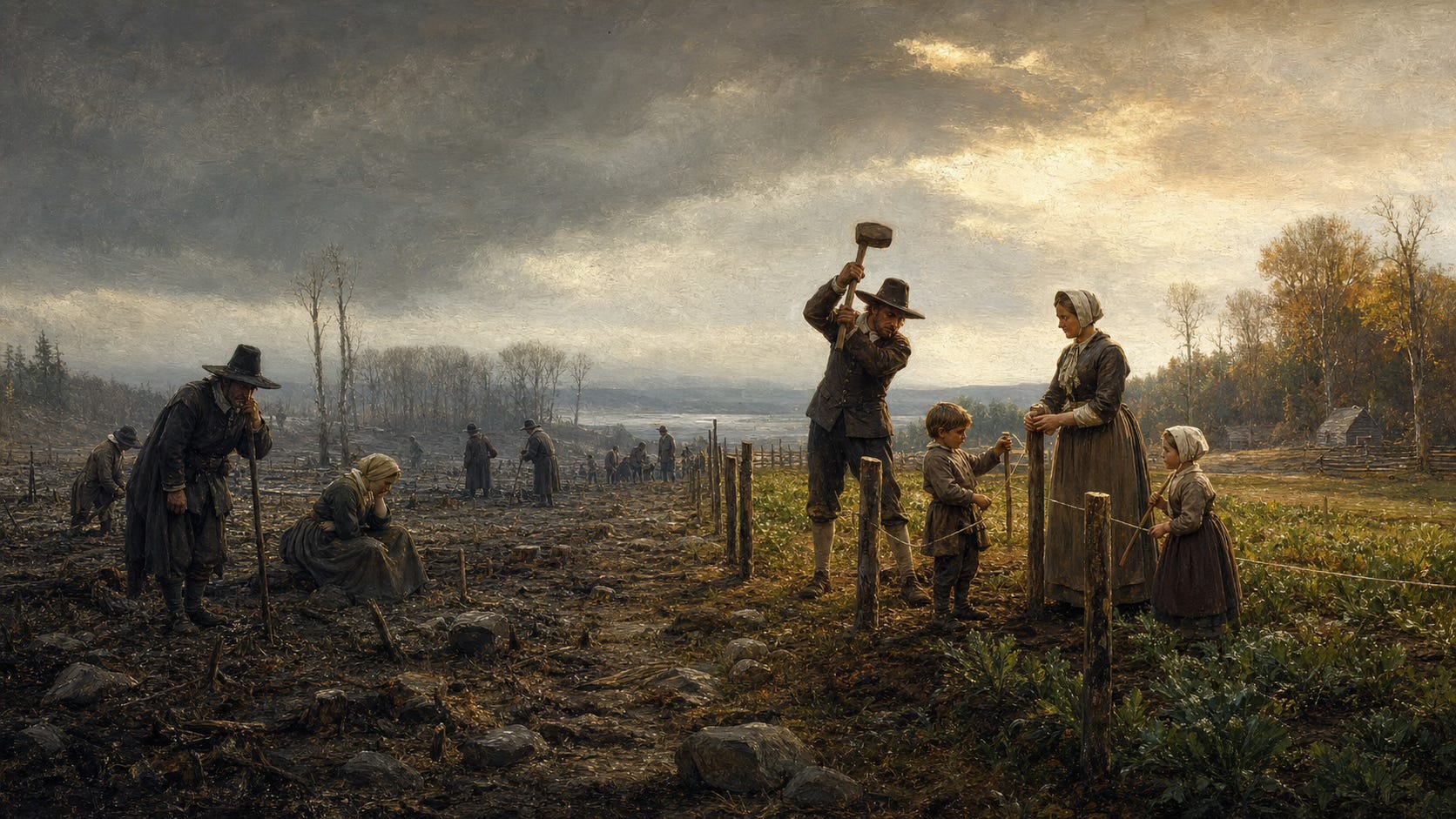
This is where John Steele Gordon begins An Empire of Wealth, his history of American economic power — and he begins there on purpose. Because once you see what happened on that riverbank, you can’t stop seeing it everywhere else in the book. Four hundred years of American history, and it keeps coming back to the same plain mechanism: give a man secure ownership of what he builds, and he builds. Take it away, and he stops.
That’s not a slogan. Gordon’s whole argument is that it’s closer to physics.
The Idea Underneath Everything: Friction Kills Flourishing
Here’s how to picture it. Imagine every economy as a machine, and liberty as the oil that lets its gears turn without grinding. Property rights, enforceable contracts, predictable courts, prices that move freely — that’s the oil. Strip it away, even a little, and friction creeps in. Things still move, but slower, hotter, with more waste.
Now picture yourself two hundred years after Jamestown — a small-town merchant in 1820s Ohio. You’ve got a wagonload of grain and a buyer three states away who’s never met you and never will. You ship it anyway. Why would you trust a total stranger with your year’s work?

Because you don’t actually have to trust the stranger. You trust the system underneath him. A contract that means something. A court that will enforce it if he doesn’t pay. A government too limited to seize your wagon on a whim. None of that is glamorous. None of it makes for a great painting. But it’s the reason you can do business with someone you’ll never look in the eye — and the reason a country full of strangers like you could build the largest economy the world has ever seen, one handshake at a time.
That’s Gordon’s real subject. Not gold. Not land. The plumbing underneath the gold and the land — the legal architecture quiet enough that almost nobody notices it’s there, right up until it’s gone.
This is exactly the mystery Hernando de Soto spent a career trying to solve. In The Mystery of Capital, de Soto argues that formal legal property’s real breakthrough isn’t protecting ownership — even squatters and tribes manage that — but radically improving the flow of information about what people own, giving assets verifiable addresses and owners a paper trail lenders can act on. A title, in other words, isn’t just proof you own your house — it’s the key that unlocks every other transaction you might build on top of it, which is exactly the unglamorous plumbing Gordon is pointing at.
Wealth Was Never the Point — It Was the Byproduct
Here’s something that might surprise you: Gordon’s history isn’t really about people chasing money. It’s about people chasing outcomes — a better farm, a faster way to move goods, a machine that does in an hour what used to take a week — inside a system secure enough that they could risk everything on the attempt. The money showed up afterward, almost as an afterthought.
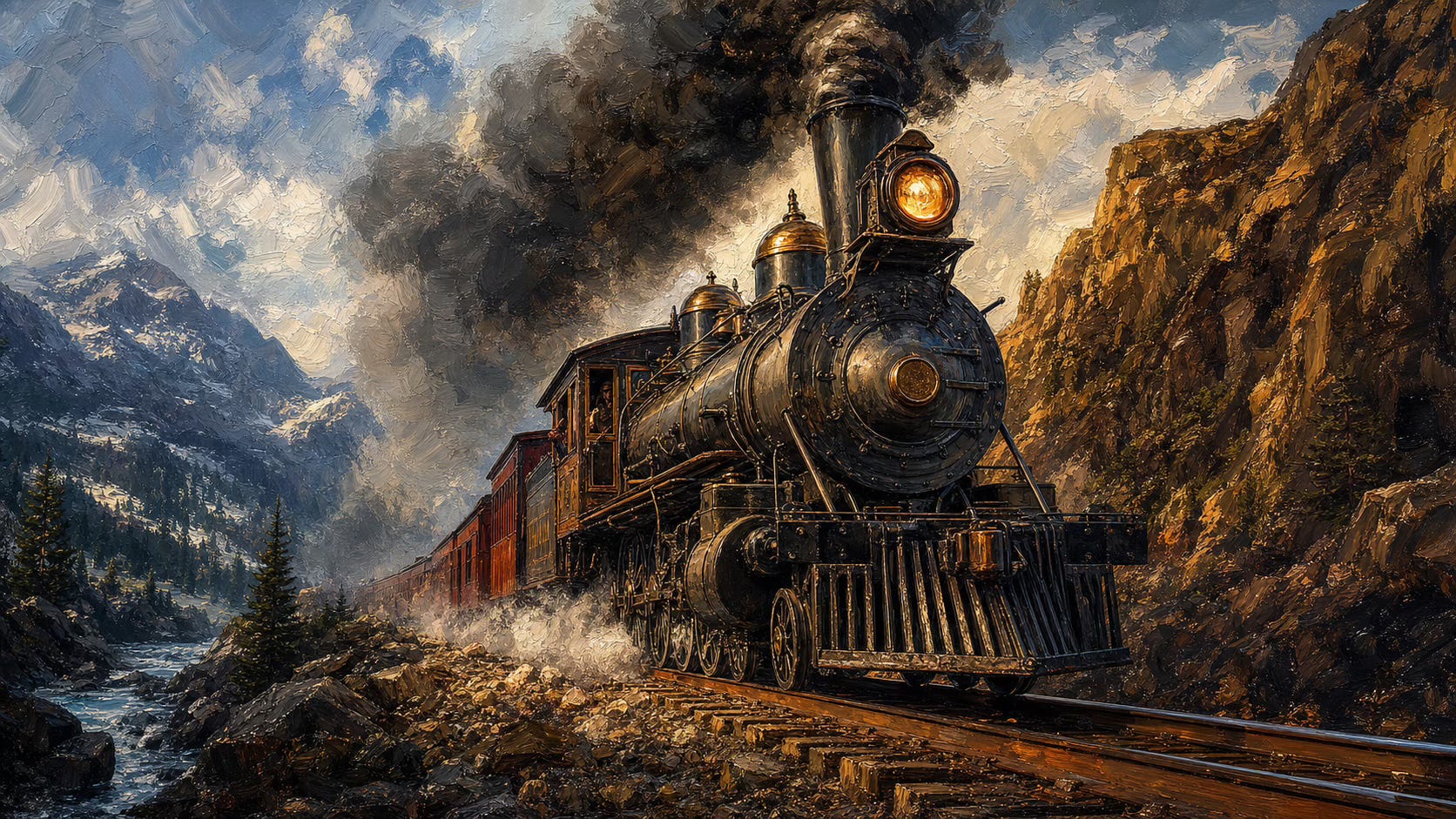
Think about the canal builders, the railroad men, the engineers who strung telegraph wire across a continent that didn’t have roads yet. None of them were betting on an abstraction called “the American economy.” They were betting their own capital on one specific, concrete idea, in a country where the rules wouldn’t suddenly change underneath them halfway through. Multiply that bet by a few million people, across a few hundred years, and you get Gordon’s empire of wealth — not because anyone planned it from above, but because almost nobody had to ask permission first.
You can feel the modern version of this yourself. Imagine you decide tomorrow to start something — a small business, a trade, a service nobody else in your town offers. You don’t need a royal charter. You don’t need to bribe an official. You sign a lease, open a bank account, and get to work, trusting that the rules you started under will still be the rules next year. That trust is so ordinary you’ve probably never thought about it. Gordon wants you to notice it’s the rarest commodity in human history.
How Wealth Quietly Became Power
Here’s the turn in the book that changes how you read everything else in the news. Gordon shows that America never had to build an empire the old way — conquering provinces, stationing legions, taxing the subdued — because it built something stranger and more durable instead. It out-produced everyone.
Picture two competing approaches to power, side by side. One empire sends ships full of soldiers to hold a coastline by force, generation after generation, at enormous and constant cost. The other empire sends ships full of grain, steel, and later software — and the rest of the world simply starts buying, building on top of, and depending on what that empire makes. No occupation required. No garrison to maintain. The wealth itself becomes the influence.
This is how the United States has operated for the last 125 years, and even more so in the last 80 as it built the post–World War II world. Here’s another interesting case: Israel, with the Abraham Accords, is beginning to do the same thing. China is trying to do this with its so-called Belt and Road Initiative, but less successfully.
That’s the quiet second half of Gordon’s argument. The navy that kept the sea lanes open was funded by the wealth, not the other way around. The universities that trained the engineers existed because the wealth could afford them. By the time you get to the 20th century, in Gordon’s telling, American power abroad is mostly just American liberty at home, exported in the form of products the rest of the world decided it wanted.
When the Engine Gets Sand Thrown In It
Gordon doesn’t let the story stay triumphant, and you shouldn’t either. He walks through the moments friction got dumped back into the machine — and what it cost.
Picture Thomas Jefferson, a president who genuinely loved the idea of American commerce, deciding in 1807 that the answer to British and French harassment of American shipping was to simply stop shipping. The Embargo Act shut down foreign trade almost entirely, intending to punish Europe. Instead it gutted New England’s merchants, who watched their own wharves go silent while the European powers barely noticed. The friction didn’t punish the enemy. It punished the people the friction was supposedly protecting.
Or picture Congress in 1930, watching a fragile economy wobble, and reaching for tariffs as the fix — Smoot-Hawley, a wall of new taxes on foreign goods meant to protect American jobs. Other countries retaliated with walls of their own. Global trade seized up. The wobble became the Depression’s accomplice.
In both cases, Gordon’s point is the same one Jamestown taught two centuries earlier: someone, with good intentions, decided central control could outperform the freedom that had been quietly working all along. Both times, it couldn’t.
Why This Belongs in Your Formation, Not Just Your Economics
You might be tempted to file all of this under “business” and move on — interesting, but separate from the deeper formation you’re actually here for. Gordon’s history makes the case that you’d be wrong to.
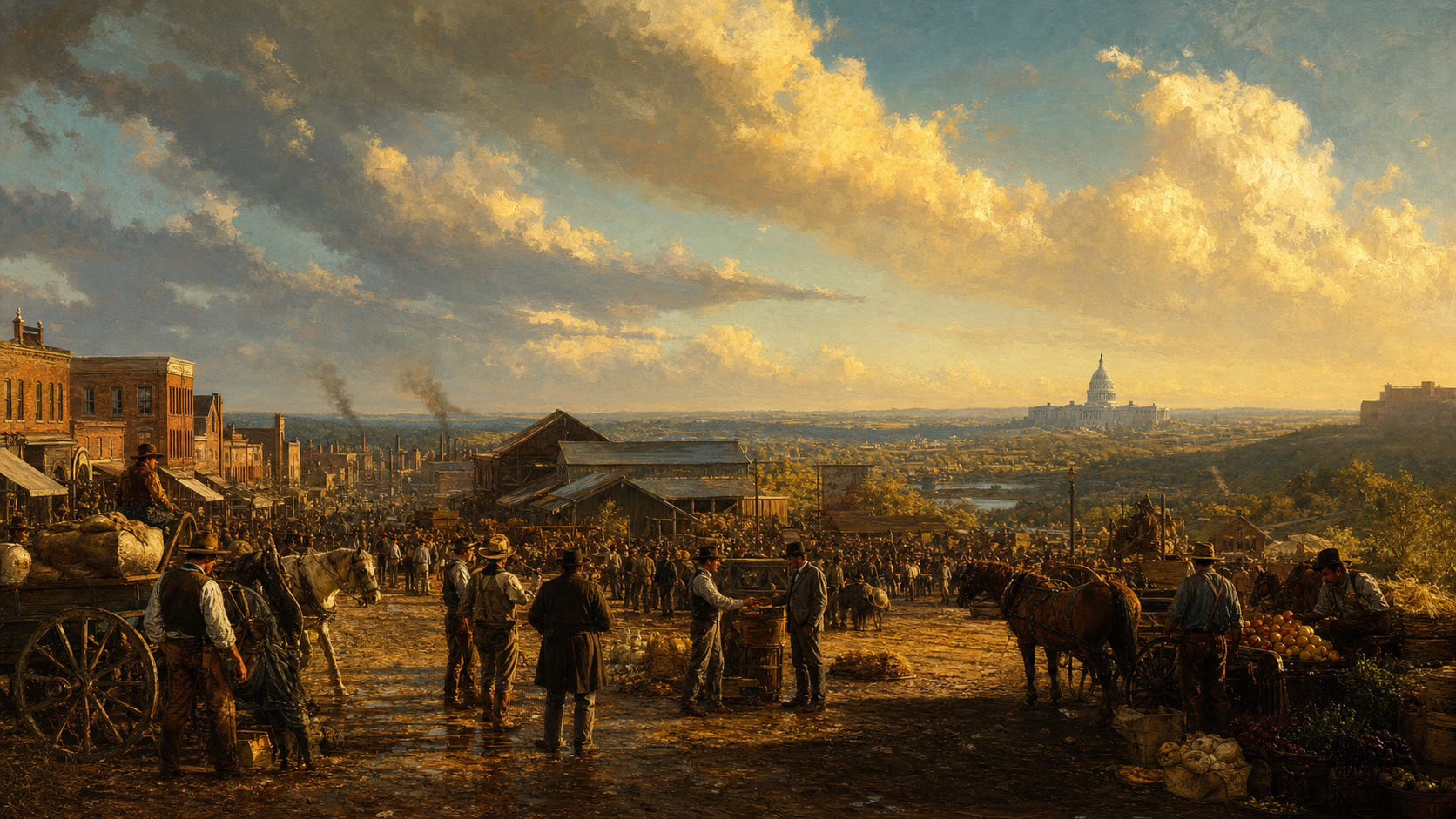
The same ordered liberty running through every chapter of An Empire of Wealth — law you can trust, property you can hold, your word and someone else’s meaning something in front of a judge — is the same inheritance Aristotle described as the condition for a flourishing life, the same structure Aquinas assumed when he wrote about justice, the same architecture the Founders were defending when they wrote the structure of limited government into the Constitution. Gordon just tells the story in ledgers and railroads instead of syllogisms. It’s the same civilization, wearing different clothes.
One Line to Carry With You
You live inside this engine right now, today, whether you ever think about it or not. Every contract you sign, every business you could start tomorrow without asking the king’s permission, every dollar you’re free to save or risk — that’s four hundred years of someone, somewhere, deciding not to throw sand in the gears.
So here’s the question Gordon’s history leaves you with, and it isn’t abstract: are you treating that inheritance like something that maintains itself — or like something that needs you to understand it, defend it, and hand it on intact?
Two hundred and fifty years is not a finish line. It’s a relay, and the baton is sitting in your hands right now. The generation that follows you won’t inherit the wealth engine automatically just because it ran well for two and a half centuries — they’ll inherit it only if someone teaches them how it actually works, and why it’s worth defending. That’s the real anniversary project. Not just celebrating what the Founders and the merchants and the railroad men built, but forming the next generation of Americans who understand it well enough — through better formation, better civics, better books — to keep the gears turning long after we’re gone.
Reading Empire of Liberty by John Steele Gordon is one such book to help you with building a flourishing life.
Build a Flourishing Life: Read Better. Think Clearer. Believe Deeper.


