MOJO Academy Book Brief #35 -- Lincoln on the Verge
MOJO Academy Book Brief -- Lincoln on the Verge
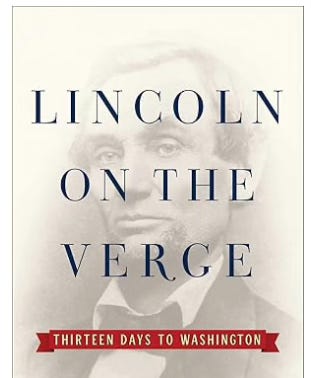
Book Title: Lincoln on the Verge: Thirteen Days to Washington
Author: Ted Widmer
Publishing Year: 2020
Number of Pages: 624
Audible Time: Approximately 17 hours
Brief Summary
Lincoln on the Verge by Ted Widmer dives into the incredible 13-day train journey Abraham Lincoln took from Illinois to Washington, D.C., to step into the presidency during one of the most chaotic times in American history. With vivid stories and thorough research, Widmer brings this high-stakes trip to life, showing us a president-elect preparing to lead a divided nation.
As a history buff, when you hear about a president traveling to the nation’s capital to take office, it can feel like just another fact. Most people are like, “Yeah, and…?” But Lincoln’s journey? Wow. It was anything but ordinary. Seriously, what a story!
As the Southern states headed toward secession and civil war seemed unavoidable, Lincoln’s journey was far from easy. He dealt with assassination threats, unrest in some cities, and constant uncertainty—not to mention the time his son lost one of his speeches right before he had to deliver it. But along the way, Lincoln took time to meet everyday Americans, give those heartfelt, classic Lincoln-style speeches, and strengthen his resolve to keep the Union together. Widmer’s storytelling ties this tense, dangerous trip to Lincoln’s growth as a leader.
This book doesn’t just follow Lincoln’s travels. It also looks at the national crisis, the tech innovations of the time, and the powerful role of railroads and the telegraph in holding a fractured country together. It’s history that feels personal, urgent, and inspiring. One of my most favorite civil war books!
Two Significant Insights
#1—The Antidote to Secession was Succession
"One thing was certain: the antidote to secession was succession—a normal transfer of power. It would require meticulous planning to assemble a new government and to determine a safe route to Washington, nestled so uncomfortably between two slave states. With the world watching, it was essential to preserve continuity between the regimes. If Lincoln failed to arrive, it would signal to the world that democracy was little more than a pretty daydream—an idealistic footnote, from ancient Greece, like one of Plato’s airy dialogues—but no blueprint for a working government."
This quote really captures just how intense the journey was. Lincoln absolutely had to get to Washington, DC—there was no other option. But the challenge? Washington was stuck right between two slave states, Maryland and Virginia. And then there was Baltimore. Oh, Baltimore, what a nightmare of a city. You can almost picture Lincoln staring at a map of the railroads, having these same thoughts. But at the end of the day, he knew he had to make it to the nation's capital. The antidote to secession was succession.
#2—In 1860, the United States were not "United" but Divided
"But even if the Lightning could race across great distances, it could not bring Americans closer together. Some worried that it was actually driving them apart. In 1858, three days after the first Atlantic Cable connected New York and London, the New York Times asked if the news would become “too fast for the truth?” Two years later, as Lincoln ran for the presidency, hateful innuendoes were streaking from one end of the country to another, accelerated by the Lightning. Many observed that the first word in the country’s name—United—had become a glaring misnomer...
In the North, law-abiding citizens were sickened by the never-ending degradation of African-Americans, as the Slave Power stretched its tentacles into the other sections. It was one thing to ignore slavery, as many Northerners were perfectly content to do. But when the federal government sent U.S. marshals into free states to find runaways, readers in the free states wondered what had happened to the moral purpose of the republic. Southern politicians never stopped asking for more: more slave states, more empire, to encircle the Gulf of Mexico and the Caribbean. In their conclaves, they began to fantasize about a new kind of realm, modeled on the ancient Mediterranean, to be funded by the open plunder of Mexican silver and an inexhaustible supply of Africans. That did not sound much like the United States of America."
Widmer really nails the mood of the country. The "Lightning" he mentions? That was the newly invented telegraph. It connected Americans from icy Maine to tropical Florida and all the way out west to Lincoln's Illinois. Suddenly, people were plugged into the same news, stock prices, and ship arrivals. But despite this new technology bringing everyone closer, Americans had never been more divided.
Nuggets of Wisdom!
Reading Lincoln on the Verge felt like hopping on history’s most dramatic train ride. What really hit me was how Widmer showed Lincoln evolving during the journey. He didn’t just get through the dangers and uncertainty—he rose above it, becoming a symbol of hope for a divided nation. At every city, every stop, you can’t help but root for Lincoln to tackle one challenge after another, even though you already know how it all ends. That’s how captivating it is!
Widmer really digs into the tense political climate around Lincoln’s election, and it totally brought those months before the war to life for me. The whole theme of resilience during chaos feels so relatable—it’s a great reminder that tough times can reveal the true strength of great leaders. This book is packed with so many great insights and nuggets of wisdom. Definitely worth a read!
Final Recommendation
Lincoln on the Verge is a must-read for history buffs, railroad fans, Lincoln enthusiasts, or anyone curious about leadership in tough times. It’s packed with incredible stories and insights that make it both fun and inspiring to dive into!
John Hay, one of Lincoln's secretaries, once described the presidency as "our Iliad," referencing the famous Greek epic about the Trojan War. And honestly, he nailed it. The Civil War was America’s Iliad—a grand, chaotic, and defining ordeal. But the story doesn’t start on the battlefield; it begins with Lincoln’s journey to Washington, D.C. And what a journey it was!
Widmer does an amazing job bringing it all to life. You’ll feel like you’re right there with Lincoln on this historic, game-changing trip. Definitely worth the read!
If You Liked This Book, You Might Like These:
Lincoln’s Greatest Journey by Noah Andre Trudeau – An in-depth exploration of a pivotal period in Lincoln’s life and leadership during the Civil War.
The Fiery Trial by Eric Foner – A nuanced exploration of Lincoln’s relationship with slavery and abolitionism.
Battle Cry of Freedom by James M. McPherson – A riveting account of the Civil War’s complex origins and progress.


