MOJO Academy Book Brief #26-- Taxes Have Consequences By Art Laffer
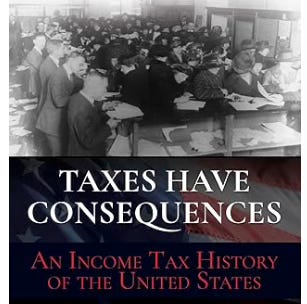
Book Title: Taxes Have Consequences: An Income Tax History of the United States
Authors: Arthur B. Laffer, Brian Domitrovic, Jeanne Cairns Sinquefield
Publishing Year: 2022
Number of Pages: 440
Audible Time: Approximately 14 hours
Brief Summary
Taxes Have Consequences delivers a fascinating and easy-to-follow journey through the history of income tax policy in the United States, uncovering its powerful influence on economic growth, innovation, and societal well-being. Led by renowned economist Arthur B. Laffer, the authors dive into how different tax strategies have shaped everything from entrepreneurship to investment—and ultimately, the lives of everyday people.
I’ll admit upfront—this book is for the nerds out there, myself included. For years, I searched for a book that could clearly explain what has worked—and what hasn’t—in tax policy over the past century. Until now, I came up empty-handed. Thankfully, Art Laffer and his co-authors have delivered exactly that. Finally, it all makes sense!
Covering over a century of tax reforms, the book brings history to life with vivid examples and data-driven insights. The message is clear: lower, predictable tax rates fuel innovation and prosperity, while high, punitive taxes stifle growth, discourage investment, and hold back potential.
This is just a book for policy wonks and nerds—but that said--it’s a bold, thought-provoking look at how the rules of taxation shape the future of a nation and it has all the receipts (as the kids like to say these days). Whether you’re an entrepreneur, a history buff, or just curious about the forces that drive the economy and get it moving again, this book will leave you with plenty to think about and most importantly, what works and what doesn't! Ultimately, most of us are searching for answers—what works and what doesn’t—backed by solid empirical data.
Two Significant Insights
#1—So 'A Flat Tax emerges in the Data'...Imagine That
"In 1913, the income tax came to the United States for good. The Sixteenth Amendment to the Constitution ratified that year specified that “Congress shall have power to lay and collect taxes on incomes, from whatever source derived.” Congress took the opportunity and set up an income tax for individuals. While at first only applying to a small subset of income earners, the tax rates ran from 1 to 7 percent; the higher the income, the higher the rate. Over the century and then some since, individual income tax rates, especially those at the top affecting high earners, have varied widely. The top rate of this tax went up past 75 percent, and then fell to 25 percent, in the teens and 1920s. From 1932 to 1980, the top rate was always above 60 percent. From 1987 through 2020, the top rate swung at rates between 28 and 40 percent.
What happened to the income of high earners in the face of widely varying, and at times very high, top income tax rates over the century following 1913 is an interesting story—a very interesting story. In general, what happened is that the total income of high earners—the rich—along with the amount of taxes they paid, was highly variable. However, one thing stayed constant. No matter if tax rates were high or low, the fabled top 1 percent of earners in the economy paid the same proportion of their total income in taxes.
This number was, as we best are able to ascertain with modern data, about 20 percent."
One of the most fascinating insights from the book is this: regardless of tax policy, the top earners consistently pay around 20% in taxes. The book delves into the reasons behind this phenomenon and argues why it is ultimately futile to pour vast amounts of resources into chasing the top 1% to make them pay what is often referred to as "their fair share."
With over a century of economic data at our disposal, we should aim to craft tax policies that are both effective and efficient, rather than wasting money criminalizing those who resist paying exorbitant tax rates of 50%, 60%, or higher. The book argues that such policies are fundamentally flawed, making them inherently ineffective. I couldn’t agree more.
Ultimately, the ideal tax policy is a flat tax system, a conclusion supported by a century of data.
#2—Myths of the Great Depression
“In our chapters on the Great Depression, we uncover the manifold tax villains at the center of the causation of this horrible event. We force attention first on the radical federal tax increases of 1930 and 1932, signed into law by President Herbert Hoover. Second, we call out the massive tax impositions of state and local governments across the country in the early 1930s, which were the root of both the housing foreclosure and the associated banking crises. The enormous mass of evidence of tax increases in the 1930s drives away any lingering contention that “capitalism” or the gold standard (a favorite of economists) caused the Great Depression. That outrageous event came care of a metastatic cancer of the tax system.
We take on the myth that World War II ended the Great Depression. We show the opposite: that the war economy deepened the Depression in terms of the crucial measurement, the degree of the national standard of living."
This truly warms my heart! Challenging the misconceptions about the Great Depression is a much-needed step in reshaping our understanding of economic history. For too long, we've been influenced by liberal or radical interpretations of the events of the 1930s and 1940s. This book serves as a cornerstone, shedding light on the true dynamics of that period. I look forward to seeing more works delve into this critical topic and we will surely cover them.
Nuggets of Wisdom!
A fascinating highlight of the book is the foreword written by the 45th President of the United States—an honor that’s both rare and remarkable.
But for me, reading Taxes Have Consequences was a powerful reminder of the impact national tax policy has on economic growth—or its lack thereof. The book is truly eye-opening, shedding light on how every dollar we spend or save reflects a much larger story about resource allocation, not just on a personal level but as a society. What resonated most with me was seeing history repeat itself—time and again, past policies have illustrated the predictable outcomes of certain decisions. It’s a compelling read that connects the dots between policy, economy, and society. What succeeds and what falls short.
I would place this book on par with Hernando de Soto’s The Mystery of Capital (2000) in terms of its foundational significance. De Soto’s work examines why capitalism flourishes in the West yet faces challenges in other parts of the world. Similarly, Taxes Have Consequences presents a compelling case for the effectiveness of supply-side economics, demonstrating how it has consistently succeeded whenever implemented. In contrast, it critiques Keynesian economics, particularly the approach of raising tax rates to excessive levels. It highlights the repeated historical failures of this strategy—far too many to ignore.
This book should be required reading for all federal and state lawmakers, especially those at the Federal Reserve. It highlights the delicate balancing act governments face—funding public goods while creating an environment that nurtures innovation, ambition, and economic growth. Backed by compelling examples spanning the past century, the book clearly illustrates what works and what doesn’t. It’s a deeply thought-provoking and insightful read!
Final Recommendation
Taxes Have Consequences is a must-read if you're into economic history, public policy, or just curious about how taxes impact our lives. And if you're a nerd like me, it's a fascinating look at a century of the U.S. sometimes getting tax policy right—and often getting it wrong. The book has an engaging style and plenty of data (100 years worth), making it perfect for students, professionals, or anyone who's just curious about how the economy works. Last year, I finished it on Audible in just a week, which proved incredibly helpful. I believe anyone could achieve the same!
If You Liked This Book, You Might Like These:
The Wealth of Nations by Adam Smith – The foundational text on economics and the free market.
The Mystery of Capital by Hernando de Soto – A compelling exploration of why capitalism thrives in some nations but falters in others, offering deep insights into property rights and economic development.
The Road to Serfdom by Friedrich Hayek – A powerful explanation of governmental overreach and its economic consequences.
Capitalism and Freedom by Milton Friedman – A seminal work exploring how free markets support political and personal liberty.


