One week in, Pope Leo has proven to be both steadfast and effective
What does it take to lead the Church in a time of rapid change, technological breakthroughs, and growing cultural diversity? Pope Leo XIV seems ready to spark a global conversation about balancing tradition and progress in today’s Catholic Church.
From his thoughts on artificial intelligence to his focus on not only synodality which we have never heard or been given an appropriate definition of it, but to a wide range of important issues, Pope Leo XIV through his first week is stepping up as a leader ready to tackle the unique challenges of the 21st century.
In this article, we’ll dive into his evolving vision, how it addresses global and Church-specific issues, and why his mix of tradition, progress, and faithfulness to the gospel could make his papacy one to watch in these critical times.
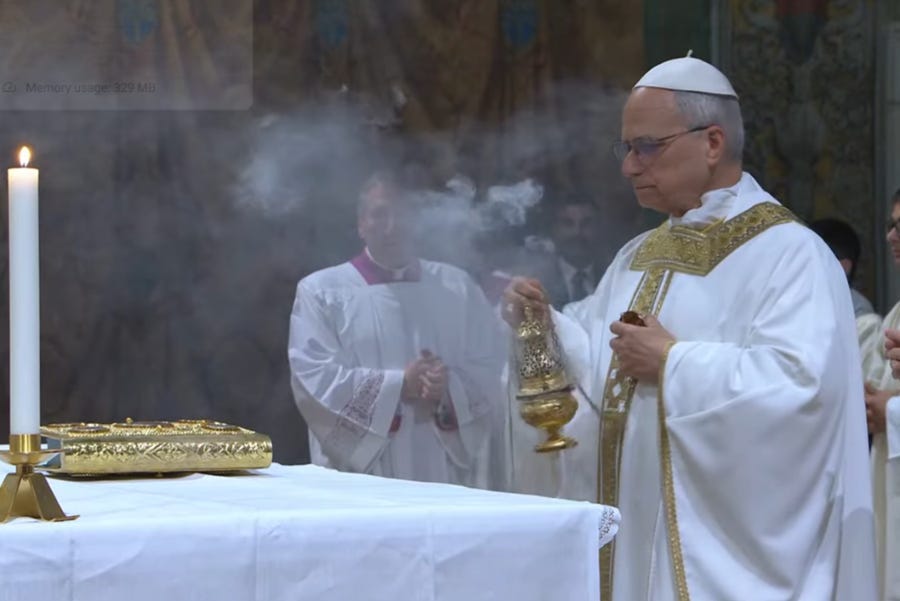
Balancing Tradition and Progress
so far Pope Leo XIV has made smalls steps towards preserving Church unity, dignity, and mission does not mean resisting modernity. Instead, he advocates for a nuanced approach that honors the Church's rich traditions while addressing contemporary issues with courage and innovation.
One of the most striking examples of Pope Leo XIV’s balanced approach is his measured stance on the Traditional Latin Mass (TLM). Widely regarded as a liturgical centrist, Pope Leo XIV appears to appreciate traditional forms of worship—evident in moments such as his singing of the Regina Caeli in Latin and offering his apostolic blessing in the same language.
Could easing the restrictions of Traditionis Custodes and returning to the more permissive standards of the Benedict XVI era promote greater harmony among Catholics? I believe so. There was little reason for Pope Francis to create tension with traditionally minded, practicing Catholics, and a more conciliatory approach may help bridge these divides. It would be a welcome and meaningful step early in his pontificate.
Another example is his view on the German Synodal Way, a reform initiative seeking significant autonomy for the German Church. Pope Leo XIV’s previous alignment with others efforts to curb the German Synodal Way’s more radical proposals underscores his commitment to preserving the universal Church’s unity and coherence. Though he seems to actively promotes synodality—emphasizing dialogue, inclusion, and shared responsibility—but he remains cautious about reforms that could undermine the doctrinal or hierarchical integrity of the global Church. Let us pray that he continues along this path of understanding. The German Synodal Way is treading dangerously close to, if not outright crossing the line into schism and heretical teachings, similar to the heretical views of one Martin Luther in the 16th century.
Tradition Meets Technology
Pope Leo XIV signaled one of his most pressing concerns is artificial intelligence (AI) and its impact on human dignity and justice. Likening today’s technological revolution to the industrial upheaval addressed by Pope Leo XIII’s landmark encyclical Rerum Novarum, Pope Leo XIV suggests that he will address ethical standards that safeguard humanity in digital spaces.
AI’s potential to concentrate wealth, disrupt labor markets, and infringe upon privacy concerns him deeply. He stresses that while innovation is essential, it must never come at the expense of human dignity. Could it be time for a modern Rerum Novarum, one that addresses the challenges of the 21st century, including digital technology and artificial intelligence? I think all parts of the church would welcome that.
We covered on this on our podcast this past week, check that out here!
Other major hot button issues
Here are some of the other pressing issues that demand thoughtful discussion and action today yet you will see below, Pope Leo XIII has been quite silent on most of these issues:
Key Issues and Positions
Ordaining Female Deacons: Cardinal Prevost is against this idea. During the Synod on Synodality in October 2023, he made it clear that “clericalizing women”-meaning ordaining them into clerical roles-wouldn’t solve the Church’s problems and could even create new ones13.
Blessing Same-Sex Couples: His stance here is ambiguous. While he’s expressed concern about Western culture showing “sympathy for beliefs and practices that contradict the gospel,” like the “homosexual lifestyle,” he didn’t fully endorse or reject the Vatican’s 2023 document Fiducia Supplicans which allows non-liturgical blessings for couples in irregular situations. Instead, he emphasized that national bishops’ conferences should have the authority to interpret and apply such directives based on local cultural differences13.
Making Priestly Celibacy Optional: There’s no clear evidence of his position on this. The available reports don’t mention any specific statements or actions from Prevost regarding mandatory celibacy for priests13.
Synodality: Prevost is in favor of synodality, which is about making the Church more inclusive and participatory. He’s been described as a “vocal proponent” of Pope Francis’ vision, seeing it as a way to bridge polarization within the Church through consultation and lay involvement3.
Climate Change and Environment: He’s outspoken in support of urgent action on climate change. Aligning closely with Pope Francis’ priorities, Prevost has stressed moving “from words to action” and warned about the harmful effects of unchecked technological development, advocating for a balanced relationship with the environment3.
Other Social Issues (Contraception, Divorce/Remarriage, etc.): There’s no specific information on his views regarding contraception, divorced and remarried Catholics receiving Communion, or other related topics. The reports are silent on these matters3.
China Vatican secret deal: here's another area he is unknown on. In 2018, the Vatican signed a provisional agreement with the Chinese Communist Party on appointing bishops, aiming to unify China's divided Catholic communities. However, the deal has faced criticism for compromising religious freedom and neglecting underground Catholics loyal to Rome. Renewed every two years, its outcomes remain mixed and will continue until at least 2028. Here’s my perspective on this troubling agreement. For a deeper dive, listen to the podcast episode we released: Vatican Foreign Policy Stumble again.
...So Far on the issues.
The major conclusion so far is that Pope Leo XIV remains largely unknown on many hot-button issues. His stance on various critical matters, such as the China-Vatican deal and other pressing challenges, continues to be ambiguous. As his papacy progresses, it will take time and careful observation to understand how these significant issues are addressed and ultimately resolved. The world will be watching closely to see how his leadership unfolds in shaping the future of the Church. I hope he addresses these challenges with wisdom, offering doctrinal clarity and Christ-centered leadership. If approached thoughtfully, the first American-born pope could be positioned for an exceptionally impactful and successful papacy. Let us extend our heartfelt prayers for his success.
The Road Ahead for Trips
Where will this first American born Pope take him next? His potential visit to Turkey in 2025, marking the 1,700th anniversary of the Council of Nicaea, signals not just a reverence for history but also an intention to strengthen ecumenical ties with the Eastern Orthodox Church. Such symbolic gestures of unity are crucial in a time when divisions threaten to fracture global Christianity.
Meanwhile, his ties to Peru, where he served as bishop of Chiclayo, reveal another layer of his pastoral identity. While a trip to Peru may not be immediately on the radar, the Pope’s deep connection to the region hints at the possibility of future pastoral outreach to engage the Latin American faithful further.
Given his current focus on fostering global unity and addressing pressing issues within the Church, it seems unlikely that the Pope would prioritize a visit to the United States in the near future. However, the city of Chicago, with its rich Catholic heritage and diverse community, will undoubtedly be ready to welcome him should the opportunity arise. Chicago, known as the Windy City and rich in faith traditions, has endured years of poor mayoral leadership and rising crime rates. It should be welcoming of him and take heart, reflecting on his insights for building a more flourishing life that im sure he will-most certainly provide in Augustinian fashion.
Moving Forward: Personnel is the Policy
The book All the Pope’s Men by John Allen highlights the most vital positions within the Vatican’s organizational structure. Although written in 2002 and featuring some outdated department names, this remains an excellent reference for understanding how processes operate within the Vatican.
Cardinal Secretary of State: Often seen as the Pope’s right-hand person, this role is like the Vatican’s prime minister. The Secretary of State coordinates the Roman Curia, manages papal diplomacy, and oversees major policy decisions, making it arguably the most powerful position after the Pope himself.
Prefect of the Congregation for the Doctrine of the Faith: This position heads the office responsible for safeguarding Catholic theology and doctrine. The Prefect ensures teachings align with the Pope’s vision, playing a crucial role in maintaining the Church’s spiritual integrity. The book notes the historical significance of this role, as seen with figures like Cardinal Joseph Ratzinger under John Paul II.
Prefect for the Congregation for Divine Worship and the Discipline of the Sacraments: This position is responsible for overseeing the liturgical and sacramental life of the Church. Its mission is to ensure that worship remains rooted in tradition while meeting the spiritual needs of the faithful. Whether addressing updates to the Missal or providing guidance on rituals, this position works to maintain the beauty and reverence of Catholic worship.
prefect for the Congregation for Bishops: Tasked with the selection and appointment of bishops worldwide, this position plays a vital role in shaping the leadership of the Church. Through careful deliberation and consultation, it identifies candidates who align with the pastoral and theological mission of the Church, ensuring strong and effective guidance for dioceses. After being appointed as a cardinal, Cardinal Prevost—now Pope Leo XIV—assumed this role.
Congregation for the Clergy: This position focuses on supporting priests and deacons in their ministry, providing guidance on formation, education, and pastoral responsibilities. It also ensures the proper administration of parishes, helping clergy serve their communities effectively and fulfill their sacred duties.
The appointment of Bishops and Cardinals carries profound significance.
As of early 2025, there are approximately 252 vacant dioceses and archdioceses globally, though 106 have interim leaders (apostolic administrators). In the U.S., 8 dioceses are currently without a permanent bishop, with another 19 led by bishops past retirement age, highlighting a need for appointments. These vacancies are dynamic, changing with retirements, deaths, and transfers.
The appointment of bishops and cardinals is crucial for the Church’s global mission, providing leadership, spiritual guidance, and stability. Timely appointments help address local challenges, pastoral care, vocations, and societal changes, ensuring the Church remains committed to serving the faithful and strengthening its presence worldwide.
May I offer a suggestion? The Archbishop of Los Angeles has served as a dedicated and faithful leader of the largest diocese in the United States. Isn’t it time to end the hesitation and recognize his contributions with a red hat? It is disappointing that, for over twelve years, Archbishop José Gomez has led this significant diocese, only to be repeatedly overlooked by Pope Francis.
Conclusion
In conclusion, so far, after his first week, Pope Leo is ensuring stable and inspired leadership within the Church is essential for maintaining its mission and outreach in an ever-changing world. Let us hope that his timely appointment of capable and effective leaders not only addresses the Church's immediate needs but also paves the way for future growth and long-term resilience. Let us hope and pray that, as Christ reminded Peter, our first pope and leader, to "strengthen his brethren," the Holy Father fulfills this mission with unwavering doctrinal clarity. In a time when confusion has persisted for over a decade, clarity and guidance are needed now more than ever.
What do you think about Pope Leo XIV’s vision for the future of the Church? How do these priorities resonate with you? Share your insights today!


