Sellout
Over the weekend on our podcast, The Theory 2 Action Weekend Show—August 10, 2025, we delved into a thought-provoking book discussion that tackles a delicate subject for GOP supporters. The focus was on the Senate GOP leadership in 1999 and their lack of resolve during the Clinton impeachment trial.
This post is part of a larger series exploring the top five U.S. presidential scandals in history. You can find the full series on our Substack—don’t miss it!
Ranked third in our list is the Clinton-Lewinsky scandal, a moment in history that continues to provoke discussion and reexamination more than 25 years later. We wanted to dive deeper into the details, offering insights that challenge the conventional narrative and shed new light on this pivotal event.
As we reflect on the past, it’s hard to ignore the storm clouds gathering around what may become another significant U.S. scandal—this time involving presidents, intelligence leaders, and others in positions of power. Stay tuned as we unpack that unfolding drama in the coming weeks.
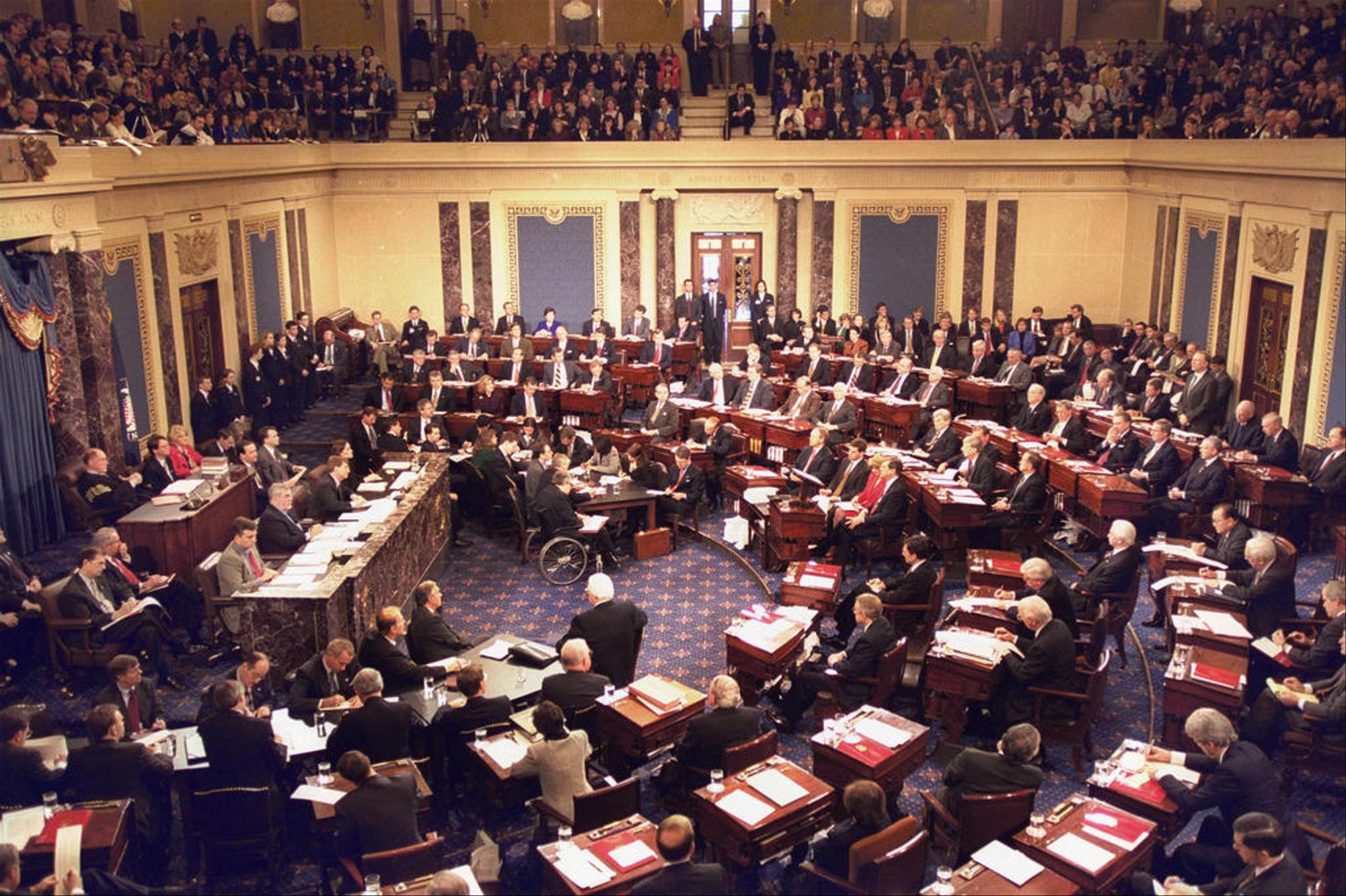
In this article, we’re providing a cursory overview into a book that sheds a harsh light on a pivotal moment in American history: the impeachment trial of President Bill Clinton. David Schippers' "Sellout: The Inside Story of President Clinton's Impeachment" (2000) is not just a recounting of events; it’s a blistering indictment of the Senate Republicans who, according to Schippers, undermined the impeachment process for political expediency. We will examine the key revelations from the book, including the undermining of the impeachment process and the lack of interest in presented evidence but more importantly we will refresh everyone's minds of when the courage stand up for justice, the rule of law, fairness and the integrity of our justice system, be mindful of some Senate GOP senators.
In the show, we explored the troubling allegations made by Schippers and analyzed the potential consequences of the Senate's actions. If you want to hear our take on this firsthand, be sure to give the episode a listen. In this post, we'll be expanding on the points discussed in the episode, providing further context and analysis of this crucial piece of political history. You can also see the show notes at www.teammojoacademy.com
David Shippers' 'Sellout': The Inside Story
David Schippers was no ordinary observer during the Clinton impeachment saga. He was the Chief Investigative Counsel for the House Judiciary Committee, tasked with presenting the case for impeachment to the Senate. "Sellout: The Inside Story of President Clinton's Impeachment" offers a firsthand account of Schippers' experiences, detailing his investigation, his interactions with members of Congress, and his growing disillusionment with the political machinations that he believed ultimately derailed the impeachment process.
Schippers paints a picture of a Republican Party more concerned with maintaining its public image and avoiding a drawn-out political battle than with pursuing justice. He claims that key Senate leaders, including figures like Trent Lott and Ted Stevens, had already decided on the outcome of the trial before a single piece of evidence was presented. This predetermination, Schippers argues, effectively rendered the impeachment process a sham, a political theater designed to appease the public without actually holding the President accountable for his actions.
The book is a compelling read, filled with anecdotes and personal observations that bring the events of late 1998 and early 1999 to life. Schippers' passion and frustration are palpable throughout the narrative, making "Sellout" a powerful and thought-provoking account of a deeply divisive period in American history.
Key Revelations: Senate Undermining the Impeachment Process
The core of Schippers' argument rests on the assertion that the Senate Republicans actively undermined the impeachment process. He details instances where he claims evidence was ignored, witnesses were discouraged, and procedural rules were manipulated to ensure that Clinton would ultimately be acquitted. According to Schippers, the Senate leadership was less interested in uncovering the truth than in managing the political fallout of the impeachment proceedings.
One of the most damning accusations in the book is that the Senate Republicans were afraid of the political consequences of a lengthy and potentially damaging trial. They feared that a drawn-out impeachment process would alienate moderate voters and hurt the party's chances in future elections. As a result, Schippers argues, they were willing to compromise their principles and sacrifice the pursuit of justice for the sake of political expediency.
Schippers also points to the lack of interest among senators in the actual evidence against Clinton. He claims that zero senators bothered to review the evidence collected by the House Judiciary Committee upon receipt of the Starr Report! This fact never countered or disputed by the Senators after the fact suggests that they had already made up their minds about the case. This lack of engagement with the evidence, Schippers argues, is a clear indication that the Senate GOP was not genuinely interested in conducting a fair and impartial trial.
The Three Critical Meetings in January 1999
Schippers highlights three specific meetings that took place in January 1999 as pivotal moments in the unraveling of the impeachment process. These meetings, held behind closed doors, involved key Senate leaders and, according to Schippers, revealed the true intentions of the Republican Party. In these meetings, Schippers claims that the senators made it clear that they had no intention of conducting a full and thorough trial, and that they were primarily concerned with finding a way to quickly dispose of the impeachment charges.
During the first meeting, Chairman Henry Hyde presented his strategy for presenting the evidence against Clinton. He was allegedly met with resistance from several GOP senators, who argued that his approach was too aggressive and would only prolong the trial. Hyde and the House managers claims that these senators were more interested in finding a compromise solution than in pursuing the truth.
The second meeting focused on the issue of witnesses. Again, Hyde and the House Managers wanted to call several key witnesses to testify, including Monica Lewinsky and other individuals who had direct knowledge of Clinton's actions. However, in the book, Schippers claims that the Senate leadership discouraged him and the House Managers from calling these witnesses, arguing that their testimony would be too inflammatory and would only further polarize the public. By then the Democrats led by Senator Joe Biden were pushing the GOP leadership to meet all their demands.
The third meeting centered on the procedural rules for the trial. Hyde and the House Managers wanted to ensure that the Senate rules were fair and impartial, and that they would have the opportunity to present his case effectively. However, they and the book claims that the Senate leadership manipulated the rules to limit their ability to present evidence and call witnesses. These three meetings, according to Schippers, were a turning point in the impeachment process, signaling that the Senate was not genuinely interested in pursuing justice.
Negligence: The Unvisited Evidence Room
One of the most striking anecdotes in "Sellout" is Schippers' account of the evidence room. He describes a room filled with documents, transcripts, and other materials that formed the basis of the impeachment case. The security in this room was air tight with guards posted at the door and sign in and sign out sheet of everyone coming and going from this room.
Yet, according to Schippers, not a single senator ever bothered to visit the room and examine the evidence for themselves. This, he argues, is a clearest indication that the senators were not genuinely interested in understanding the facts of the case.
Schippers expresses outrage and disbelief that the senators would be so dismissive of the evidence. He argues that their failure to review the materials was a dereliction of their duty as jurors in the impeachment trial. By refusing to engage with the evidence, Schippers claims, the senators effectively abdicated their responsibility to render a fair and impartial verdict.
The image of the unvisited evidence room is a powerful symbol of the Senate's alleged indifference to the truth. It suggests that the senators were more concerned with political considerations than with the facts of the case, and that they had already made up their minds about the outcome of the trial before even reviewing the evidence.
Two books strongly support these assertions: James Rogan's Catching Our Flag and Bob Barr's The Meaning of Is: The Squandered Impeachment and Wasted Legacy of William Jefferson Clinton. Both authors, former House managers who witnessed the events firsthand, provide invaluable insight. Alongside David Schippers' account, these works lend substantial credibility to the argument that the events of early 1999 marked a profound disruption of law and justice.
Senator Stevens' Shocking Statement
Schippers recounts a particularly disturbing conversation he had with Senator Ted Stevens, a Republican from Alaska. According to Schippers, Stevens told him point-blank that he did not care about the evidence against Clinton, and that he was not going to vote to convict him regardless of what Schippers presented. Schippers quotes Stevens as saying, "I don't care if you prove he raped a woman and then shot her dead. You're not going to get 67 votes."
This statement, written in 2000 when the book came out was never pushed back against by then Senator Ted Stevens, is a damning indictment of the Senate's impartiality. It suggests that at least one senator had already made up his mind about the case before the trial even began, and that he was not going to be swayed by any amount of evidence. Schippers argues that Stevens' statement is a clear indication that the impeachment process was a sham, and that the Senate was not genuinely interested in pursuing justice.
While Stevens' alleged statement is particularly shocking, Schippers claims that it was representative of the attitude of many Senate Republicans. He argues that they were more concerned with protecting the President and avoiding a political crisis than with upholding the rule of law.
The Seven Republicans Who Voted Against Conviction
Ultimately, the Senate voted to acquit President Clinton on both articles of impeachment. While a majority of senators voted to convict, the votes fell far short of the two-thirds majority required for removal from office. Seven Republican senators joined with the Democrats to acquit Clinton, effectively nullifying the impeachment process. These seven senators were:
John Chafee (Rhode Island)
Lincoln Chafee (Rhode Island)
Susan Collins (Maine)
Jim Jeffords (Vermont)
Arlen Specter (Pennsylvania)
Olympia Snowe (Maine)
Robert Smith (New Hampshire)
Schippers argues in the book that these seven senators bear a significant responsibility for the failure of the impeachment. He claims that they put political expediency ahead of their duty to uphold the Constitution and hold the President accountable for his actions. By voting to acquit Clinton, Schippers argues, they sent a message that the President was above the law and that his actions would not be punished.
The motivations of these seven senators have been debated extensively. Some argue that they voted their conscience and that they genuinely believed that Clinton's actions did not warrant removal from office. Others argue that they were motivated by political considerations, such as the desire to appeal to moderate voters or to avoid a divisive political battle.
The most striking and unsettling fact I kept returning to is this: not a single senator took the time to visit the evidence room to review and familiarize themselves with the materials. This is truly astounding. During an impeachment trial—one of the most significant and solemn responsibilities a senator can face—you would expect careful consideration of the evidence to be a given. Yet, they neither made the effort nor showed the desire to engage with it. To me, this is nothing short of astonishing. No senator, whether Democrat or Republican, ever visited the evidence room in the Ford Building to examine the materials firsthand.
The Democratic Block: A Party-Line Acquittal
While Schippers focuses his criticism primarily on the Senate Republicans, he also acknowledges the role played by the Democratic senators in Clinton's acquittal. He notes that all 45 Democratic senators voted to acquit Clinton on both articles of impeachment, effectively forming a united front in defense of the President.
Schippers argues that the Democratic senators were motivated by partisan loyalty and a desire to protect their President from political harm. He claims that they were willing to overlook Clinton's actions and ignore the evidence against him in order to maintain their party's grip on power.
The Democratic Leadership in the Senate, Joe Biden, Carl Levin and Joseph Lieberman for their part, argued that the impeachment charges were politically motivated and that Clinton's actions did not rise to the level of "high crimes and misdemeanors" required for impeachment. They also argued that the impeachment process was a distraction from more important issues facing the country.
The party-line vote on the impeachment charges highlights the deep partisan divisions that characterized the Clinton era and started in full and certainly carried over for the next 25 years. It also underscores the difficulty of conducting a fair and impartial impeachment trial in a highly polarized political environment.
Conclusion: Reflecting on Impeachment and Integrity
David Schippers' "Sellout" is a provocative and controversial book that raises important questions about the integrity of the impeachment process and the role of political considerations in the pursuit of justice. While his accusations against the Senate Republicans are serious and potentially damaging, they deserve to be noted as we approach another explosive scandal coming on the horizon.
Hopefully, This book serves as a reminder that even in moments of great national crisis, political expediency can sometimes trump principle and that the pursuit of truth can be sacrificed for the sake of political gain which should never happen.
The Clinton impeachment trial remains a contentious topic, and opinions about its fairness and legitimacy continue to vary widely. However, "Sellout" offers a valuable perspective on the events of 1998 and 1999, providing a firsthand account of the political machinations that allegedly undermined the impeachment process. By examining the revelations in the book, we can gain a deeper understanding of the challenges and complexities of impeachment, and the importance of upholding the principles of fairness, impartiality, and integrity in the face of political pressure.
To me, it is utterly unconscionable that not a single senator, whether Democrat or Republican, took the initiative to visit the evidence room in the Ford Building and examine the materials firsthand. Such neglect is beyond unacceptable. It is unconscionable.
Be sure to check out this week's episode of The Theory 2 Action Weekend Show--August 10, 2025 where we delve into these themes. Please comment below on your thoughts on Schippers' claims in this book and whether you believe justice was served in the Clinton impeachment trial.


