The Impending Crisis of Our Time
One of the finest books on the road to the U.S. Civil War is David M. Potter’s The Impending Crisis: America Before the Civil War, 1848–1861. This work paints a wide panorama of political, social, and cultural events, showing how the 1850s became more volatile with each passing year.
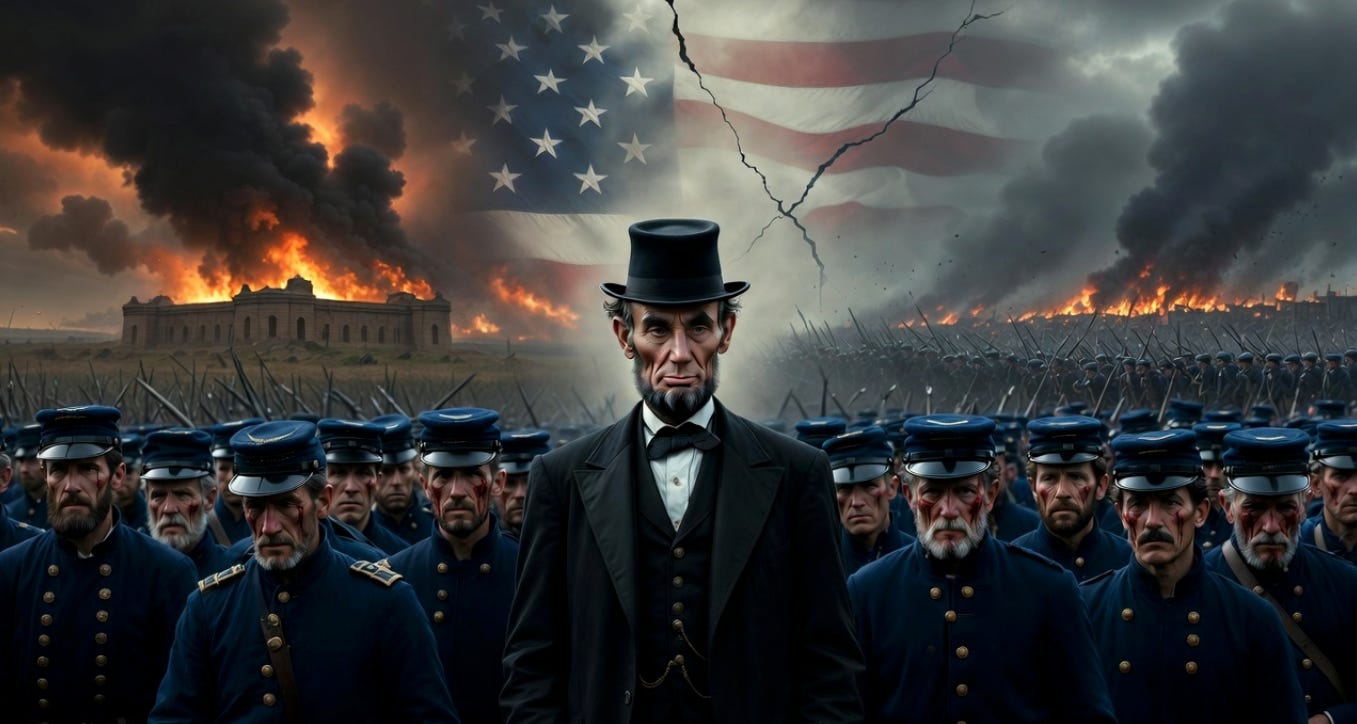
It is both bizarre and unsurprising that we seem to be living through a similar kind of unraveling in 2025. Is 2025 the 1855 of our time, or are we already much closer to our own Fort Sumter than we want to believe?
The signs are all around us—markers, guideposts, the modern “tea leaves”—suggesting that the radical elements of today’s Democratic Party are melting down in ways that echo the pre–Civil War crisis. The mood, the rhetoric, and the escalating sense of existential stakes all feel uncomfortably familiar.
One vivid example is Sasha Stone’s “Barack Obama and the ‘Bitter Clingers,’” which argues that Obama’s famous comment about Americans who “cling” to guns and religion marked a turning point in elite liberal contempt toward ordinary voters. The piece traces how that attitude hardened into a broader culture of moral superiority and intolerance, helping to fuel the instability now defining our own impending crisis.
Here’s a sample:
When I look around at the crumbling empire I helped build, I wonder how it all went so wrong. How did so many people lose their minds, the legacy media lose its objectivity, and so many so-called “educated” people lose their grip on reality?
Remember, this is someone who once sat comfortably inside the Hollywood “in crowd,” showering Barack Obama’s election with effusive praise, and now she is titling a series “Virtual Civil War” and rebuking the very people she helped elevate. To watch her release a 43‑minute podcast and essay attacking the same radical ideology she once amplified is nothing short of remarkable.
Another vivid example of this new Civil War language comes from Victor Davis Hanson’s powerful catalog of the radical Left’s abuses over the last decade in his latest piece at American Greatness. His opening paragraph, like Stone’s, deserves to be set out in full right alongside hers.
The fictitious Hollywood insurrectionist, Chairman of the Joint Chiefs of Staff, “James Mattoon Scott” (Burt Lancaster), who in the 1964 film Seven Days in May attempted to overthrow the presidency?
Or perhaps Jefferson Davis? He ultimately ordered the attack by South Carolina state forces against the federal garrison at Fort Sumter, which ignited the Civil War.
Or is the better inspiration the “Stand in the Schoolhouse Door?” Alabama Governor George Wallace likewise vowed to use his state’s law enforcement to nullify a federal law.
Yet how odd that the left, which had lectured us so often about a January 6th “insurrection”—a charge that not even the Javert-like special counsel Jack Smith ever lodged against Donald Trump—now talks frequently about the proud nullification of our nation’s federal laws.
Yes, it is odd—and more than a little radical.
Recently, at the MOJO Academy, we published “The Rise and Fall of the Fire-Eaters” You might remember from your American history classes—especially if you went to school before 2000—that the “Fire-Eaters” (sometimes called “Fire-Breathers”) were a loose group of pro-slavery extremist politicians, editors, and orators in the 1850s South who demanded secession and an independent slaveholding Confederacy. They earned their nickname from the kind of rhetoric that seemed to breathe fire over slavery and states’ rights, with the clear goal of inflaming sectional tensions, not calming them.
Their relentless agitation helped make peaceful compromise impossible after Lincoln’s election in 1860. Seven Deep South states bolted from the Union largely because Fire-Eaters had spent a decade convincing Southern voters that the North was bent on destroying slavery and their entire way of life—and they did it before Lincoln even took the oath of office. In that sense, the Fire-Eaters were the 1850s equivalent of today’s most uncompromising ideological radicals, with one crucial difference: their extremism directly triggered the Civil War.
The hope now is that this new impending crisis does not end in a Second American Civil War, but instead in moderates successfully talking down the ever-more-radical voices inside today’s Democratic Party. The problem, of course, is that many of those moderates—Joe Manchin and Kyrsten Sinema being prime examples—have already been pushed out, marginalized, or ostracized, leaving the field more and more to the modern Fire-Eaters of our own time.


