When the Shepherd Negotiates with the Wolf, part 2 of 2
Earlier this week, in Part 1, I walked through the deal itself: what little we actually know about the secret 2018 agreement between Rome and Beijing, the five structural problems baked into it, and the uncomfortable parallel serious Catholic commentators keep drawing to the 1933 Reichskonkordat with Hitler’s Germany. I closed by naming names — Cardinal Parolin, Cardinal Fernández, and the question of how much longer Pope Leo XIV can let them run this debacle before it becomes entirely his.
Today, the human side of the story. The man who’s spent his whole life warning Rome about exactly this. The bishops still paying the price. And two (three actually if you count part 1’s naming of books) to arm you for the conversation.
Who would know the character of the Chinese Communist Party better
Than a man born in Shanghai who watched the Party seize his homeland, fled it as a teenager, and spent the rest of his life among the people it left behind?
Joseph Zen was Bishop of Hong Kong. He taught in mainland seminaries. He knows both the underground Church and the state-approved one (the patriotic church is the official title because why? the communists love to hijack names—so patriotic means exactly the opposite) from the inside, better than almost anyone alive.
He called the 2018 deal a surrender.
Not a compromise. Not a prudent diplomatic step. A surrender — of the Church’s authority over her own bishops, handed to a regime that has spent seventy years trying to control, monitor, and ultimately replace the Catholic faith with loyalty to the Party.
Zen’s argument has never been complicated. A shepherd does not negotiate away his flock’s freedom for a treaty with the wolf. He does not trade the sacraments for diplomatic recognition. And he does not stay quiet about it, even when Rome would prefer he did.
He’s paid for that clarity. Beijing has targeted him. His own Church has sidelined him. And still, at 94, he showed up at Jimmy Lai’s sentencing to stand beside a friend the state was about to bury alive in a prison cell.
That’s what fidelity looks like when it costs something.
In the Cardinal’s own words
Zen laid out his case in that slim 2019 book, “For Love of My People I Will Not Remain Silent,” and it’s worth sitting with a few of his actual arguments rather than just my summary of them.
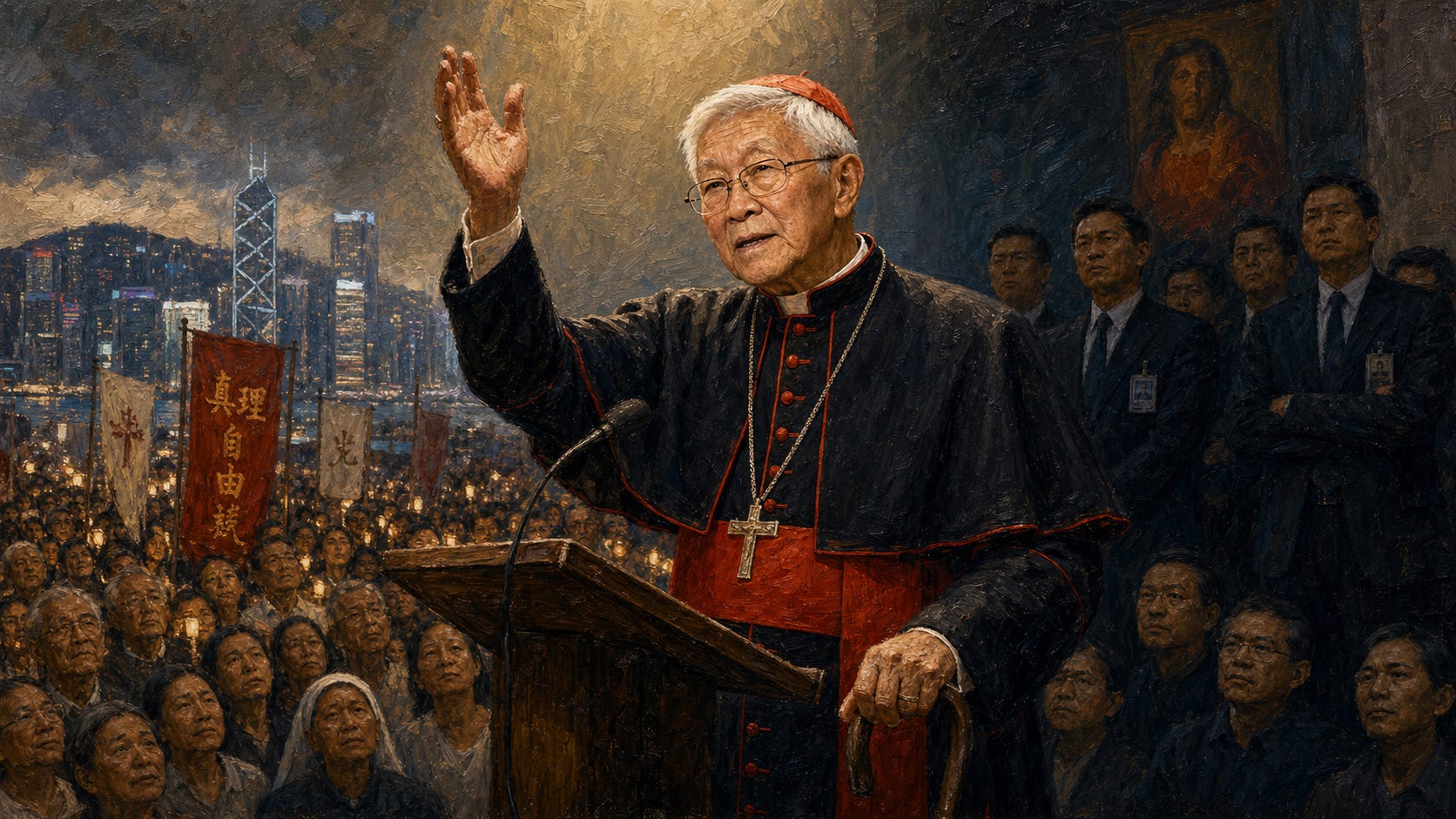
He traces the root of the problem back to Ostpolitik — the old Vatican habit of accommodating communist regimes rather than confronting them.
In one exchange he recounts, he told Pope Benedict XVI directly that Rome’s willingness to yield had only made Beijing more arrogant. Benedict’s answer is the most striking line in the whole book: he turned to his Secretary of State and asked him to recall that John Paul II, when it came to Ostpolitik, had once simply said “Enough.”
That’s the same John Paul II whose bishops in Poland never got a power-sharing agreement with Moscow.
Zen’s deeper argument is about the nature of negotiating from weakness.
When you enter a dialogue already desperate for an outcome, he warns, you’ve handed your negotiating partner all the leverage. A deal reached from that position isn’t peace. It’s closer to a surrender dressed up as a treaty. And he’s blunt about who he thinks the Chinese Communist Party actually is at the negotiating table: masters of manipulating language, operating from a worldview where truth itself is just whatever serves the Party.
Here’s Zen in his own words, from that book:
“Aren’t the gentlemen in the Vatican saying that the purpose of an agreement is to favor the evangelization of the great nation? Let them remember that Communist power is not eternal! If today they go along with the regime, tomorrow our Church will not be welcome for the rebuilding of the new China. Right now, the whole world sees the state of religious freedom in China go from bad to worse. Can we hope to gain something from coming to terms with this government? When I say that it’s almost like hoping that Saint Joseph can get something out of talking with Herod, I am not joking.”
Six years after that book, the record backs him up completely.
There’s more worth sitting with from here: why the “small steps” defense doesn’t hold up against the historical record, the names of the bishops Rome still won’t say out loud, and two (or three) books that will help you think through this more clearly than I can in one sitting.
If this has been useful so far, I’d love to have you along for the rest of it, and for more nuggets of wisdom.


