From the Lost Cause to the New Left: Who Shaped the Story of America?
Think back to your history class in school. You sat there. You opened the textbook. You memorized names and dates for a test.
Did you ever stop and ask: who wrote this book? And why did they choose to tell the story this way?
Most of us never asked. I know I never did.
We just believed it. We thought history was just facts, laid out in order, like a math problem.
It’s not that simple. History is written by people. And people have beliefs. Those beliefs shape what they choose to tell you — and what they choose to leave out.
Today, I want to walk you through the different ways historians have told America’s story over the last 150 years.
Once you see the pattern, you won’t read a history book the same way again.
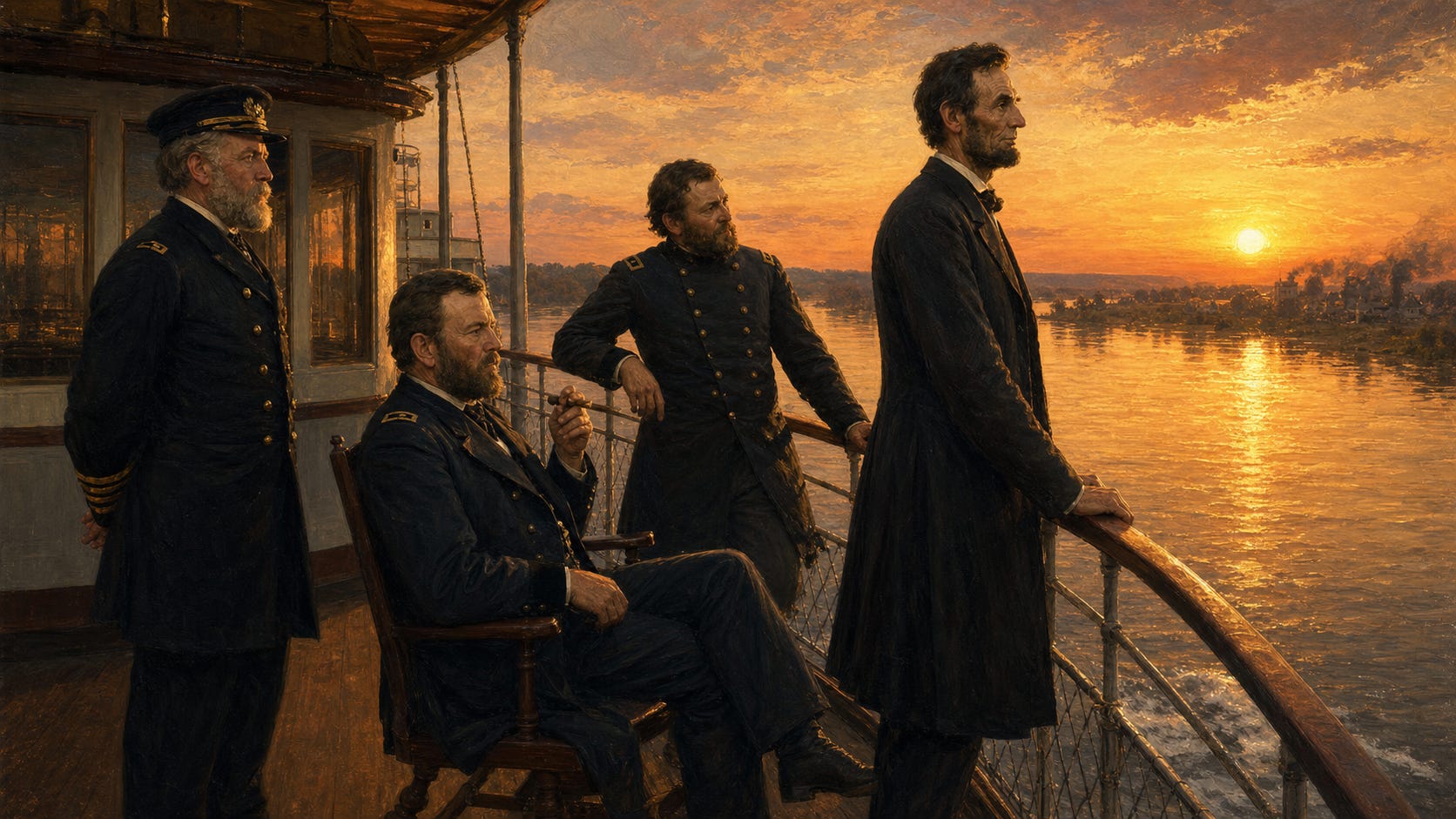
A Warning: The Lost Cause
Let’s start in the South, after the Civil War.
A story took hold there.
It said the war wasn’t really about slavery.
It said the South was just fighting for “states’ rights.”
It painted Confederate soldiers as noble men defending their homes, not a system that enslaved millions of human beings.
This story is called the Lost Cause.
Here’s the MOJO Academy Book Brief for the best book on the subject
And here’s the part that should worry you: it wasn’t just talk around the dinner table. It got built into monuments. It got built into veterans’ parades. And it got built into school textbooks.
When people tell you “only the victors write the history” well that’s rubbish!
For decades, from the 1890s all the way into the mid-1900s, Southern kids grew up learning this version of the story. Softer versions of it even made their way into textbooks outside the South.
It wasn’t the whole story!
Here’s something worth knowing.
The Lost Cause was never a formal school of professional historians. Nobody sat in a university and built this idea with footnotes and peer review. It was something different — a long-running memory movement.
It was pushed first by ex-Confederate leaders themselves.
Confederate men like Jubal Early, Jefferson Davis, Alexander Stephens, Edward Pollard, and John Gordon spent their after-war years writing books, giving speeches, and shaping how the South would remember what happened. They weren’t neutral. They had lived it, lost it, and now they were telling the story their own way.
Who cares about the truth?!
These men didn’t stop at writing books either. They reached further. They influenced veterans’ organizations.
They influenced women’s memorial groups, the ones who raised the money for all those statues you’ve seen in town squares.
And most importantly, they influenced textbook gatekeepers and sympathetic academics — the people who actually decided what got printed and taught in schools.
Here’s why that matters so much!
Many historians believe this movement did real damage, and not just to the historical record.
In fact, many believe it helped set back Reconstruction and Black civil rights for generations.
It legitimized white supremacy.
It undermined Black citizenship.
And it helped normalize a social order that imposed heavy, long-term economic costs on the entire South — costs that outlasted the generation that told the story.
Here’s the lesson for you: loving your country, or your region, or your family’s history, is a good thing. But love can never mean hiding the truth. When you protect a story instead of the facts, you’re not honoring your heritage.
You’re burying it!
The Lost Cause proves something important: history doesn’t only get twisted by people who hate their country.
It can also get twisted by people who love their country too much to look at it honestly. To look at the facts honestly!
Keep that warning in your back pocket. You’ll need it for the rest of this piece.
Lets move into the 20th century!
The Progressive School: Follow the Money
Starting around the 1910s and running into the 1940s, a new group of historians showed up.
Men like Frederick Jackson Turner, Charles Beard, and Vernon Parrington.
Their big idea was simple: history is mostly a fight over money and power.
When a politician gave a speech about liberty, these historians asked, “Okay, but who profits from that?”
Give them some credit.
This lens and worldview caught real things. It caught corruption. It caught rich men hiding behind patriotic language while protecting their own wallets.
But here’s the problem.
If you only ever ask “who profits,” you start to explain away everything else.
Faith becomes a cover story.
Patriotism becomes a cover story.
Character and conviction become cover stories.
Under this lens and worldview, nobody ever really believes what they say. They’re always just protecting their money.
That’s not how real people work. You know that and I know that.
You’ve met people who actually believe things and act on those beliefs, even when it costs them money.
One more thing worth knowing about these writers: they weren’t shy about who they admired if not worshipped.
Progressive historians category generally favored Teddy Roosevelt, Woodrow Wilson, and most especially Franklin Delano Roosevelt. To them, these were the leaders who used government power to break up the very economic interests their history books warned you about.
Most especially FDR.
He used federal power to address the Depression, regulate finance, strengthen labor protections, and build a social welfare state.
We will review at a later date if he was actually successful because that story hasn’t been told faithful to the facts!
By this time in the early 20th century, most professional historians were themselves progressive to liberal in their own politics.
So it’s no surprise they saw FDR as something bigger than just another president. To them, he was the culmination of the reform presidency & executive power— the proof that their whole way of reading history had been right all along.
One more name worth flagging here: Charles Beard.
Of all the Progressive historians, Beard came the closest to very left wing Marxist thinking.
His most famous book argued that the Constitution itself was rooted in the economic interests of the men who wrote it — that the framers were protecting their own property and investments, not just building a system of liberty.
That argument strongly resembles the kind of economic analysis you find in today’s same Marxist thought, where the real story is always about who owns what.
The Consensus School: Finding Common Ground
After World War II, from about 1945 to 1965, a new group of historians pushed back on this very leftist worldview.
Writers like Daniel Boorstin, Louis Hartz, Richard Hofstadter, and David Potter.
Their argument was more sound: America isn’t just a battlefield of class warfare.
Most Americans, across generations, have actually agreed on the big things — a constitution, private property, individual rights, a democratic government.
This school brought back attention to our institutions.
Our shared habits. What actually makes America different from other countries.
But it had a blind spot too.
When you spend all your time talking about “common agreement,” it gets easy to smooth over the deep, ugly fights — slavery, race, labor, women’s rights, who actually gets a say in this country.
You miss the details!
Those fights were real.
Consensus history sometimes talked around those fights instead of through them.
One more thing worth knowing about these historians: they didn’t favor presidents simply because they were liberal or conservative, Democrat or Republican.
They favored presidents who represented the durability of the American political order itself.
Washington, for founding it.
Lincoln, for preserving it.
Both Roosevelts, for so-called reforming it.
The New Left: History From the Bottom Up
Then we come to the late 1950s and exploding through the 1960s and 70s, a new wave came in. A radical extreme leftist wave!
Writers like William Appleman Williams, Howard Zinn, Staughton Lynd, and Herbert Gutman.
Their claim: American history isn’t a story of everyone agreeing.
It’s a story of power, exclusion, and people fighting back against it.
They wanted to tell history “from below” — workers, enslaved people, immigrants, women, and anyone else the old textbooks skipped over.
There’s some value here. Again, some value but not all value.
These writers dug up voices that had been buried. But that work didn’t stay neutral for long. It got skewed. Very skewed!
Here’s the danger.
Once this lens becomes the only lens, it stops adding to the story and starts replacing it.
A country that did real good and committed real wrongs turns into a country that only ever did wrong.
The Constitution stops being something people fought and sacrificed to build. It becomes a cover story. Faith stops being something that actually moved people to build hospitals, fight slavery, and care for their neighbors.
It becomes a mask. Every reform movement that ever expanded freedom in this country gets treated the same way — as a trick, not a triumph.
Kinda disgusting if you ask me!
One more thing worth knowing about these historians: they didn’t have presidential heroes the way the Consensus historians did.
The New Left writers who rose up inside universities didn’t view any U.S. president as good or even great.
Their real heroes were people outside the halls of power entirely.
Eugene Debs
W.E.B. Du Bois
Martin Luther King, Jr.
Cesar Chavez
labor organizers
abolitionists
anti-war activists
ordinary people and collective movements
Some of these folks are good Americans.
But you don’t have to take my word for how far this worldview has spread.
Howard Zinn’s horrific textbook, A People’s History of the United States has sold more than two million copies.
Right now, in classrooms all over this country, kids as young as middle school are handed this book.
Your own kids might read it this year.
And when they finish it, here’s what they’ll have learned: their country is not worth defending, because it was never worth much to begin with.
The founding gets buried.
The sacrifice gets buried.
The progress gets buried.
All that’s left is one long story of oppression, wearing a different mask in every chapter.
There’s disgust and hate in what they write!
Think about what that does to a kid. You can’t love, defend, or improve a country you’ve been taught to see as pure evil.
You can only tear it down. That’s not education. That’s demolition.
Ask yourself something. Do you know anyone, in real life, who is entirely good or entirely evil? No. Nobody’s like that.
So why would we believe a whole country is?
Here’s where I stand, plainly.
I’ve always believed America has been, wholeheartedly, a good country — verging on a great one.
Not a perfect one. We will never be perfect
But this group of historians would demand perfection before they’d ever call something good.
That’s an impossible standard. No country, no person, no institution in the history of the world has ever met it.
Holding America to a standard nobody could ever meet isn’t honesty. It’s a trap. A very deadly trap!
What This Means for You
Here’s what I want you to see.
Here’s our nugget of wisdom for today
Every one of these schools — the Lost Cause, the Progressives, the Consensus historians, the New Left — grabbed onto one piece of the truth and then squeezed everything else to fit it.
The Lost Cause hid the sin to protect the pride.
The Progressives reduced everything to money.
The Consensus school smoothed over the conflict.
The New Left reduced everything to oppression.
America is not a fairy tale where everything was always noble and good.
It’s also NOT a crime scene where nothing good ever happened.
It’s a human story — sin and sacrifice, injustice and reform, failure and real achievement. It deserves to be told whole, not sliced down to fit somebody’s argument.
So where does that leave you and me? Who do we trust to actually tell it straight?
Here's why this isn't just an academic exercise.
You can't build a flourishing life on a foundation you don't understand.
That’s what we are trying to build here at the MOJO Book Academy: A Flourishing Life.
Now, if you believe your country's story is nothing but sin, you'll have nothing to stand on and nothing to be grateful for.
If you believe it's nothing but glory, you won't have the honesty to fix what's broken.
Either way, you end up building your life on sand.
Knowing the true, whole story — the good and the bad — is what gives you solid ground to stand on, gratitude for what you've inherited, and the clarity to keep improving it.
That’s exactly what I’m covering tomorrow!
I’m going to hand you the specific historians I’ve read and trusted for over 15 years — real names, real books, and why each one earned a place on my shelf. A place of trust and why!
Til then and as always, keep fighting the good fight.
~ David


