pt 2, Watergate Revisited: Shepard’s Case Against the Prosecutors
Watergate: The Story Geoff Shepard Says They Got Wrong
Yesterday, I walked you through the Watergate story almost everyone believes. Nixon’s team broke into the DNC, tried to cover it up, got caught, and resigned in disgrace. The system worked. No one is above the law. Case closed.
Here’s the callback you need before we go further: that story isn’t wrong about everything. Real crimes happened. Nearly two dozen people connected to Nixon’s White House went to prison. Nobody serious disputes that!
But a man named Geoff Shepard says the story you know is missing its most important chapter. And he’s not some outside conspiracy theorist. He was ACTUALLY in the room.
Who Is Geoff Shepard, and Why Should You Listen to Him?
Shepard worked as a lawyer inside Nixon’s White House. He sat on Nixon’s Watergate defense team. That means you should read him with your eyes open — he’s not a neutral historian looking at this from a distance. He has a side.
But here’s why he’s worth taking seriously anyway: he spent decades after Watergate digging through archival material that most journalists and historians never bothered to open. Internal prosecution memos. Documents that only became available years later. He wrote three separate books laying out what he found.
You don’t have to agree with his conclusions to learn something from his research. I was skeptical in the beginning too.
Let’s look at what he actually argues.
The Big Reframe: Two Separate Questions
Shepard’s whole argument rests on splitting one question into two.
Question one: did Nixon’s campaign and senior staff do something seriously wrong? Shepard says yes. He doesn’t dodge this. He admits the disgrace was real.
Question two: did the people investigating, prosecuting, and impeaching Nixon follow fair rules while they did it? Shepard says no. Absolutely not!
Think about why that distinction matters. Imagine a man is guilty of a crime, but the police plant evidence and the judge secretly coaches the prosecutor. The man being guilty doesn’t erase the misconduct in how he was tried. Both things can be true at once. That’s the core of what Shepard is arguing about Watergate.
Book One: A Political Motive Behind the Curtain
Shepard’s first book, The Secret Plot to Make Ted Kennedy President: Inside the Real Watergate Conspiracy (2008), focuses on the political world surrounding the scandal, particularly the Kennedy wing of the Democratic Party.
His claim is that Watergate wasn’t just a neutral, apolitical accountability process. It was also a political opportunity. Nixon had just crushed his opponent in a landslide in 1972. Shepard argues that ambitious Democrats — Kennedy allies especially — saw Watergate as their chance to reverse that landslide and take back power.
That doesn’t mean the crimes weren’t real. It means, in Shepard’s telling, that the people pursuing Nixon weren’t purely motivated by principle. Politics was baked into the process from the start.
Remember, ambitious Democrats were around in the 1970’s !
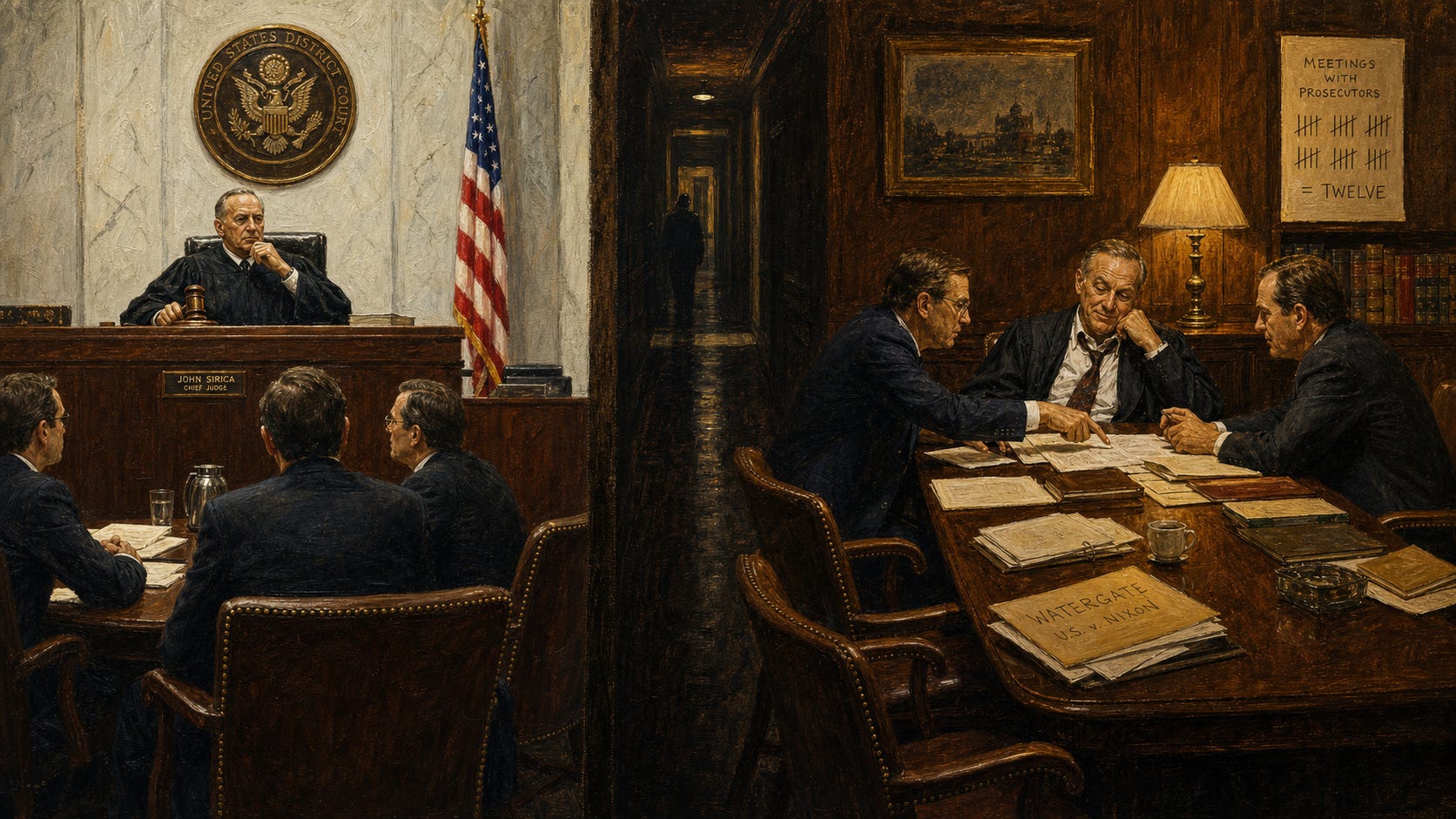
Book Two, exhibit A: The Trials Themselves
This is where Shepard’s argument gets more serious, because it’s not just about motive anymore. It’s about whether the actual legal process was fair.
Here's exactly what you get when you subscribe: the names of the specific prosecutors and the judge Shepard says had improper private contact during the trial — contact that, if real, should have blown up the case. You'll get his full reinterpretation of the "smoking gun" tape, including the Mexican money trail almost nobody has ever heard of, laid out side by side with the mainstream reading so you can judge it yourself. And you'll get the two Academy Book Briefs to save you time and so you're not just taking my word for any of this — you can go check the primary sources yourself. This is the exact material that never makes it into the textbook version of Watergate, the part most journalists never bothered to dig up. If you want the full picture instead of the fifty-year-old sanitized one, subscribe now and keep reading.


