The Golden Thread You Didn’t Know You Were Holding
Picture this. You wake up tomorrow morning. You flip a switch and the light comes on. You turn a handle and clean water comes out.
You walk outside and nobody stops you and asks for your papers. If someone wrongs you, you can go to a real court and a judge will actually listen.
Nobody can throw you in jail just because they don’t like what you said last night at dinner.
You don’t think about any of that. Why would you? It’s just... there.
But it wasn’t always there. And it isn’t there for most people who have ever lived on this earth.
I’ve been reading a big two-volume history called The Golden Thread: A History of the Western Tradition, written by two historians, Allen Guelzo and James Hankins. And the title says it all. Western civilization isn’t one flag, one country, or one political party.
It’s a thread.
A long, connected rope of ideas and beliefs that stretches all the way from ancient Greece to your kitchen table this morning. Pull on one end, and you can feel it move all the way down. I want to hand you that thread today.
Because you can’t protect what you don’t know you have.
The stuff we never notice
Here’s a quick story to make this real.
Imagine two guys, both born the same year, in different places. One is born in a country with no real courts, no free press, and a leader who can lock people up for saying the wrong thing. The other is born in a small American town.
The first guy has to be careful his whole life. Careful what he says. Careful who he talks to. Careful what he believes out loud. If a powerful person decides they don’t like him, there’s nobody to stop them.
The second guy grows up assuming things will just work (for now!)
He assumes he can start a business, go to church he chooses, say what he thinks about the President, and sleep at night without worrying about a knock on the door. That second guy didn’t earn any of that. He was born into it. It was handed to him. That’s the thread.
And here’s the thing about it:
Free courts didn’t just appear.
Free speech didn’t just appear.
The idea that even a king or a president has to obey the law didn’t just appear.
The idea that a poor person and a rich person deserve the same justice didn’t just appear.
Somebody built each one of those things. Somebody argued for it, fought for it, sometimes died for it. And it can be lost the same way it was won — a little at a time, mostly by people just not paying attention.
Where the thread comes from
So where did all this come from? The book breaks it into a few big pieces. Let’s ponder it together
Greece gave us the habit of asking why. The Greeks — guys like Socrates — believed you shouldn’t just accept what you’re told. You should question it. Test it. Ask if it’s actually true. That habit of asking hard questions instead of just obeying is a Western habit. A lot of the world never had it.
Rome gave us the idea of law over leaders. Rome built courts, laws, and rules that were bigger than any one ruler. A society isn’t safe just because it has a strong leader. It’s safe when it has strong laws that even the leader has to follow. Rome taught the West that lesson the hard way.
Christianity gave us the idea that every person matters. This one’s huge, and a lot of people miss it. Before Christianity spread through the West, plenty of ancient cultures believed some people just mattered more than others — kings more than peasants, citizens more than slaves. Christianity taught something different: every single person has worth, no matter how poor, weak, or powerless they are. That belief is where a lot of our ideas about caring for the sick, the poor, and the outcast actually come from.
The modern West gave us science, liberty, and limits on power.Later on, starting around 1500, the West went through huge changes — new science, new ideas about liberty, and new efforts to build governments where power was limited and checked. That’s where things like our Constitution come from. The idea that no single person or group should hold all the power.
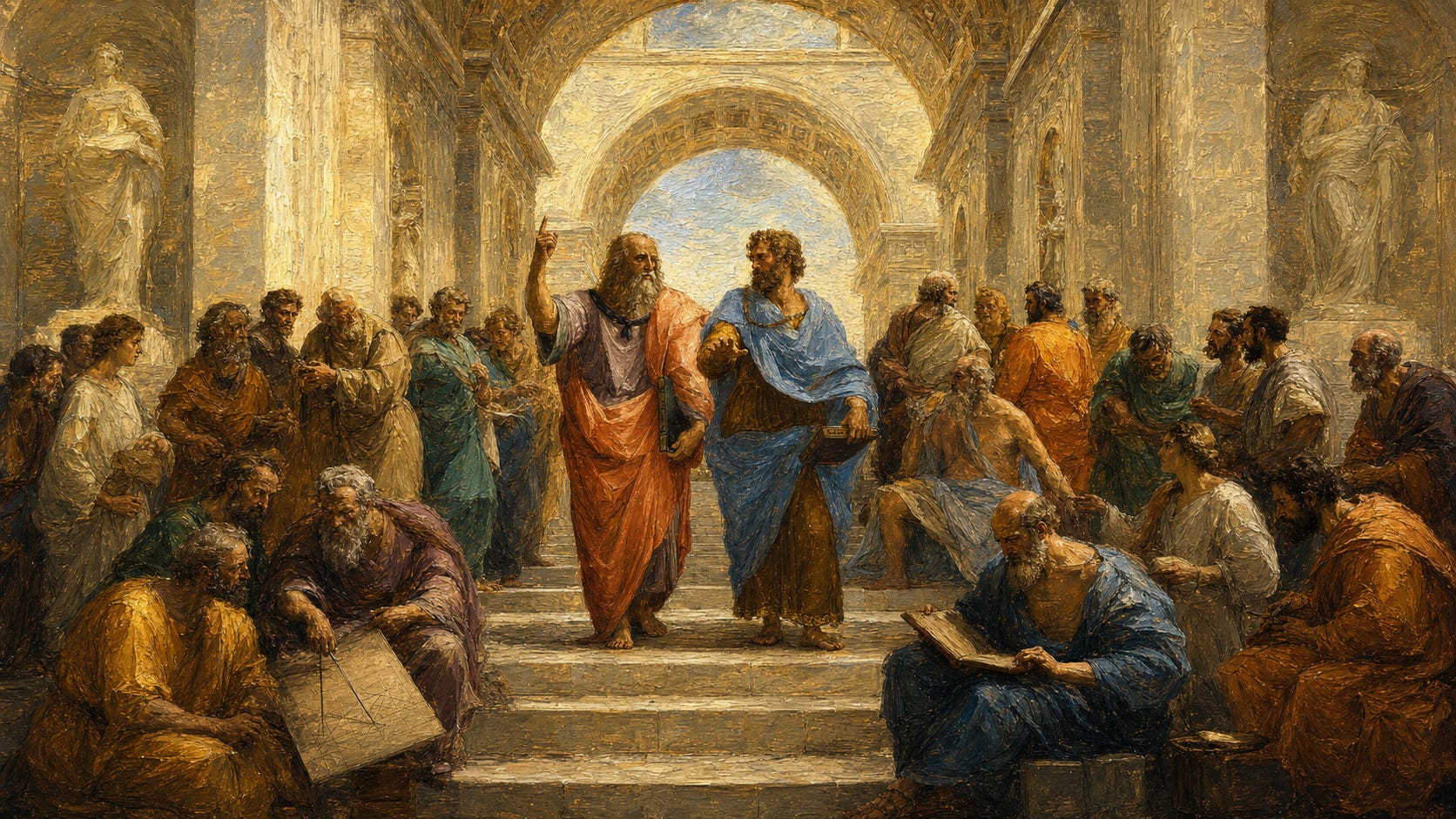
Put those four things together — questioning, law, human dignity, and limited power — and you get the thread. A Golden Thread in fact.
That’s what you’re standing on right now in the West, whether you realized it or not.
It took me four years of college and asking a lot of questions to finally start to wrap my hands around this gem of a gift. I was fortunate to have grown up when the universities were still teaching Western Civilization and not hating on it.
The West messed up plenty. Say so.
Now, let’s be honest for a second, because I’m not going to sell you a fairy tale.
The West has ugly chapters. Slavery (We won’t mention Islamic slavery here) Colonialism. Wars that killed millions. Times when Western nations completely betrayed the very ideals they claimed to believe in. Anybody who tells you the West has a clean record is lying to you, and you shouldn’t trust them.
Anybody that tells you any civilization has a clean record is lying to you! Plain and simple.
But here’s the part people leave out when analyzing the West: the people who fought hardest against those wrongs weren’t outsiders attacking the West. They were people inside the tradition, holding it to its own promises.
Frederick Douglass didn’t throw out the Declaration of Independence. He held America’s feet to the fire and said, “You wrote that all men are created equal. Prove it.”
Martin Luther King Jr. didn’t invent a new set of values out of thin air. He reached back into the Bible and the Constitution and said, “Live up to what you already claim to believe.”
That’s the real strength of the thread. It’s strong enough to judge itself. It gave people the tools to look at their own country and say, “This is wrong, and here’s why,” using the same tradition’s own best ideas.
Why this matters for you, right now
Here’s my worry as we in the United States celebrate 250 years of our nation and yet the West (and Western Civilization) has been taking a beat down for the better part of the last 50 years.
In 2026, Europe has lost its confidence.
The UK is beyond confused about its heritage and inheritance.
We in America are just now waking up out of slumber it seems to recognize this blind spot.
But, still, a lot of people today grow up never learning any of these Western values or our Western Civilization story.
They don’t know where free speech came from.
They don’t know why courts matter.
They don’t know why it’s dangerous when one person or one party gets too much power.
And when people don’t know the “why” behind something, they stop defending it. It’s hard to protect a gift you don’t know you were given.
On the podcast this week, here’s the link, we marked 25 years since 9/11, and I share a scholar named Samuel Huntington. Back in 1993, and then again in a full book in 1996, Huntington argued that the next big conflicts in the world wouldn’t be about economics or politics. They’d be about civilizations — different ways of seeing the world, colliding with each other. He called it a clash of civilizations. And he nailed it.
Those men and women on those four flights on September 11th? They were the first battle in that clash. They didn’t know it walking onto those planes. But that’s what it was.
That means this isn’t just a history lesson. It’s a live fight. If we’re going to defend the West, we have to actually know what we’re defending — the Judeo-Christian ethic, the rule of law, the dignity of every person. Everything we’ve inherited is worth defending. But you can’t defend what you don’t understand.
You don’t have to become a professor to fix this and likely your professor has taught you to hate Western Civilization.
Or even go to college to understand Western Civilization.
But for us, you and I, we can appreciate the gift we have been given. There’s tons of good resources everywhere! This book is a good start.
It is a great gift.
Let us not be ashamed of it. Our Story and the story of Western Civilization is a great story.
We have to learn about it, keep asking questions about it, and keep passing this thread on to the people around you — your kids, your neighbors, your friends. All of those that appreciate the Western Heritage and Western Civilization!
Let me pull one quote from the book to highlight what a great gift and inheritance we have been given.
A civilization cannot be kept alive without studying its history in a spirit of love and gratitude as well as with a fixed determination to mend its every flaw, as we might do with the legacy of a parent. It requires what we venture to call a proper pride, not tub-thumping, but not imprecation either. A sentiment that is impossible without knowledge of that civilization in all its manifestations. That includes pride in its traditions of freedom and pride in its religious universe. We have written these volumes to foster such a spirit
Again that was Allen Guelzo and James Hankins in The Golden Thread: A History of Western Tradition.
And, frankly, what a great history and hertiage it is! Don’t let others tell you differently!
We should learn this history, we should understand it, and we should—most especially appreciate it—for we are standing on their shoulders in the West to see its greatness and its flaws and all its beauty and heartache too.
Let us learn it not despise it because some have told its flawed story!
We can begin to correct this story and tell its truth!
Keep holding the thread
The West was never perfect. But it is good.
It was built slowly, by flawed people, through arguments, mistakes, and hard-won corrections.
But it handed you something rare: the idea that truth matters, that every person has worth, and that even the powerful answer to the law.
That’s not something to take for granted. That’s something to understand, protect, and pass forward.
As always, keep fighting the good fight and sharing the Golden Thread!
~ David


